24% of New Hires Were Referred to DataArt
The year 2021 marked a significant expansion for DataArt. We expanded our presence, particularly in Poland, Bulgaria, Armenia, and opened our first offices in the UAE, Kazakhstan and Georgia. We actively recruited for remote positions. Our hiring capability grew by double digits:
- +261% compared to 2020.
- +133% compared to 2019.
In absolute amount, we hired 2550 new colleagues last year, which equals to 69% of the company headcount beginning 2021.
A large number of new colleagues were recruited through our referral program, direct marketing, job boards, and corporate websites in countries of DataArt's presence. A statistically insignificant number of candidates came after professional and networking events.
Share of Hires via Referral Program
The number of referrals to DataArt grew unprecedentedly last year. Under DataArt's referral program, every employee is eligible for a referral fee (commission) if a new colleague they refer to the company gets tenured after an introductory period.
Of all new colleagues we hired in 2021, 24% came via the referral programs – this is an all-time record. By contrast, over last five years, this ratio was lower – 18-20% of the total number of hires. Of all Senior (Strong Middle +) engineers hired in 2021, 20% came through the referral program.
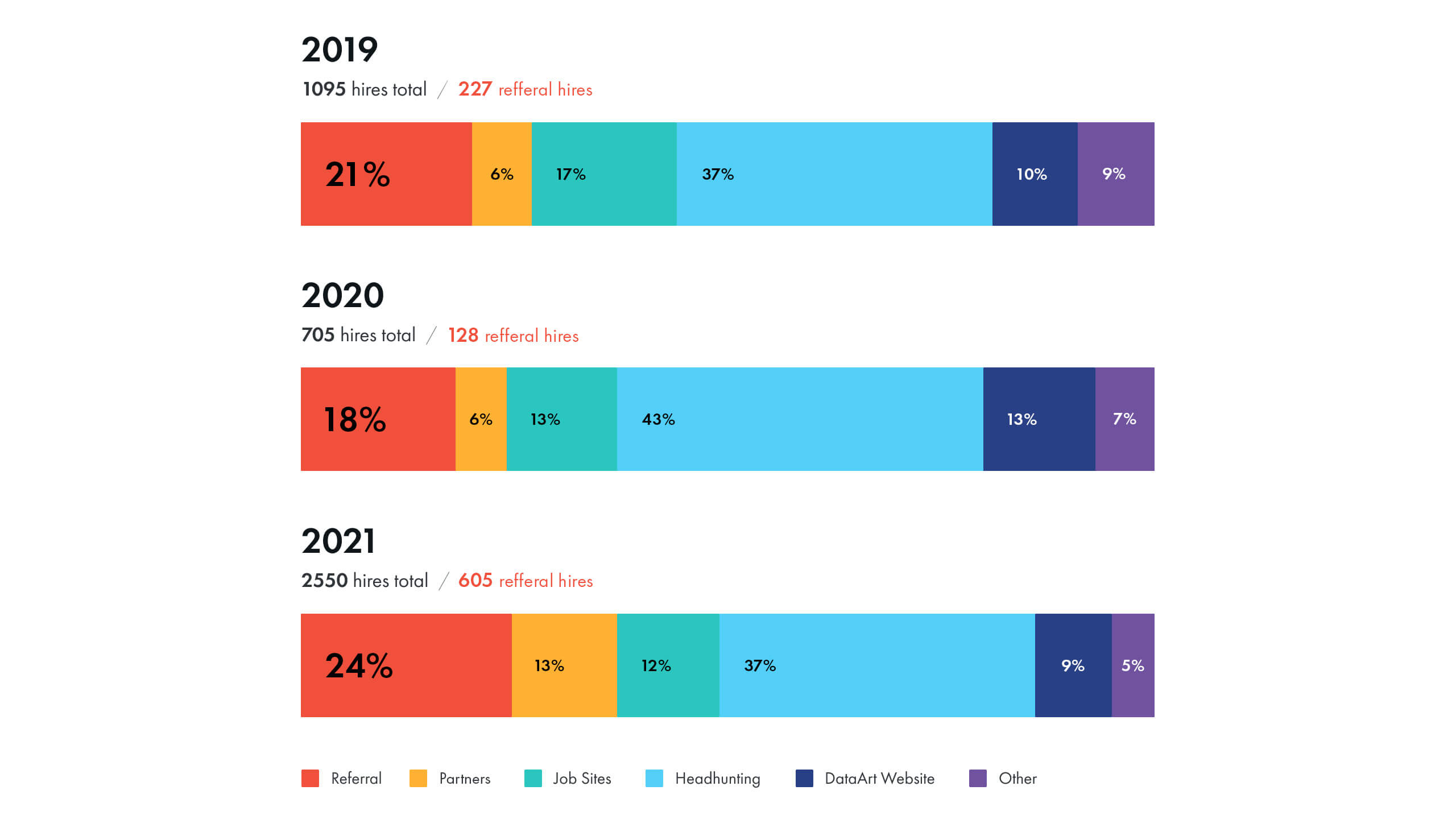
From the chart above, you can also see how DataArt strengthened its work with partners – recruiting agencies and freelance recruiters – in 2021. Their share of hiring increased from 6% to 13%.
We think the increased number of referrals is a result of recent changes in the IT labor market.
The pandemic turned the IT labor market upside down, shifting the focus from employer to employee. Under hyper-demand for software development and technical skills, it is no longer the hirers who rule the market. Now candidates choose the best fit among a multitude of job offers based the company’s EVP, prospects for advancement, working conditions, perks, among other factors. This is when the first-hand reviews about the potential employer are worth weight in gold.
As more companies adopt remote working, to job applicants – they are just another website or a LinkedIn page. Does the company value its staff? Is the corporate culture good or bad? How does it feel to work there? Hard to tell. No company will ever put itself in unfavorable light. But all of these questions (and more) can be answered by a real person who works (or used to work) for the company. Real reviews from referrers lower the level of uncertainty, so candidates feel more comfortable and accept job offers willingly.
Statistically, referred candidates nail an interview better than the those who came via other sources: we hire around 27% of referrals, and just around 10% of candidates from job boards.
Share of Hires from Job Boards
The number of new hires from job boards gradually decreases. Companies invest more and more in their own HR brand and marketing strategy, and candidates expect a personal touch from potential employers, so impersonalized vacancies are no longer appealing.
The ratio of DataArt's Senior engineer hires through job boards:
- 5% in 2021
- 8% in 2020
- 11% in 2019
However, the ratio is significantly higher for Junior level specialists – 27%. Almost the same number (25%) of Juniors were referred to us this year. This means Junior candidates actively follow online vacancy updates from the companies they know – yet another reason companies need to nurture students and graduates.
Conclusion
A referral program helps companies to reduce time and costs of hiring and increase retention rate. Referrals are usually a "quality hire": they get tenured faster and stay longer. Research suggests that employees who referred at least one candidate to their company also stay with it for a longer period. But not just that.
For DataArt, the success of the referral program means a lot. It serves as an indicator that our existing employees feel appreciated and happy working at the company. For a similar reason, our ex-employees turned into DataArt ambassadors when they left.
If people are empowered to refer a friend or relative to us, then they like the working conditions, share our corporate values, and approve our management. As we bring People-First culture to the front, we invest in a cool employer brand, which is equally important for both existing and potential employees.