

The Rise of In-Play Betting
The popularity of in-play betting is not just a passing trend. In fact, it’s becoming the backbone of the sports betting industry. According to Optimove, in-play bets accounted for 52% of all wagers in 2024, highlighting a clear preference among bettors for dynamic, real-time betting experiences. This trend is mirrored globally, with in-play betting representing a significant portion of total betting volume in major markets like Europe and Asia.
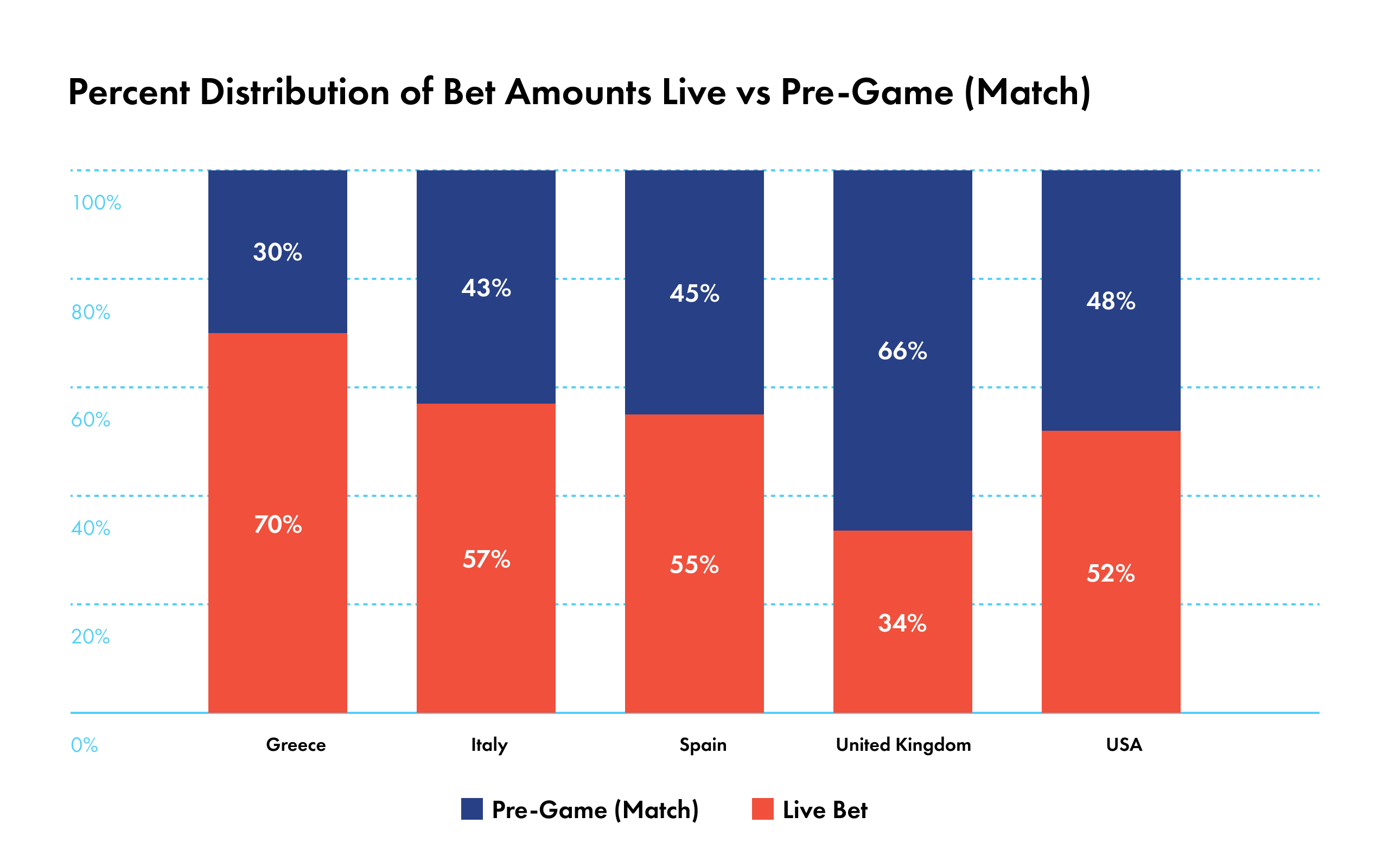
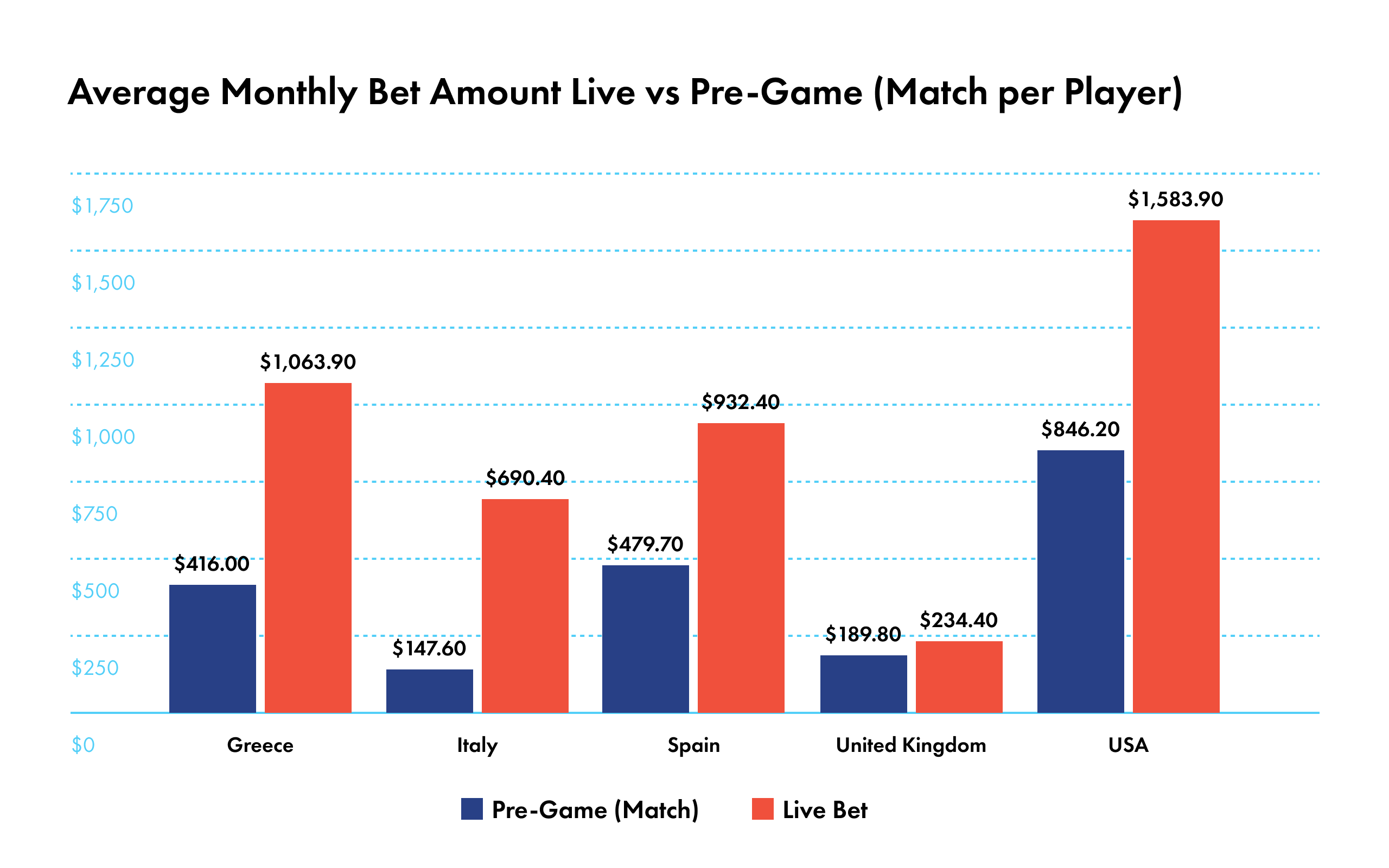
In the US, the numbers are particularly striking. The same report found that US bettors who placed in-play wagers spent 87% more per month on average than those who only bet before games. This substantial difference in spending reflects the immersive nature of live betting, where every moment becomes an opportunity to wager.
One reason for this surge is the continuous flow of micro-events during a game; each representing a potential betting opportunity. Unlike traditional pre-match bets, in-play wagers keep bettors engaged throughout the event, enhancing fan participation and extending viewing times. This format has proven particularly popular in fast-paced sports like basketball, soccer, and tennis, where the action can change rapidly and dramatically.
The message for sportsbooks are clear: live betting is no longer optional – it’s becoming the core of the sports wagering experience, with enormous monetization potential if harnessed effectively.
Technology as a Game Changer
Behind the scenes, rapid technological advancements are powering the in-play betting revolution. Real-time data feeds, machine learning, and AI-powered algorithms are now critical to delivering the seamless experience that today’s bettors expect.

In our recent Sports Betting Conversations interview, Einar Knobel, CEO of TXODDS, emphasized the importance of data speed and accuracy in maintaining competitive odds.

This focus on data is also reflected in strategic industry moves, such as DraftKings’ acquisition of Simplebet. By integrating Simplebet’s machine-learning models, DraftKings aims to create a faster, more frictionless live betting experience, providing bettors with highly accurate odds and instant market updates.
Delivering a smooth in-play betting experience is as much a technology challenge as it is a trading one. One major consideration is latency – the delay between real-life action and what bettors see on their screens. Even a few seconds of lag can make or break the viability of live odds. To cut this delay, major sportsbooks are investing heavily in ultra-fast data feeds and streaming solutions.
For example, Sportradar recently extended its long-term partnership with Major League Baseball (MLB) through 2032. This deal allows Sportradar to exclusively distribute ultra-low latency official data, including MLB Statcast data, to its vast network of sportsbook and media clients. This partnership aims to unlock the full potential of MLB’s data and audiovisual content while enhancing the fan experience through innovative, AI-driven products powered by player tracking data.
Broadcasting as a Catalyst for In-Play Betting
The rapid growth of in-play betting is closely tied to the evolution of sports broadcasting. As live broadcasts increasingly feature integrated betting data, they are becoming an essential driver of real-time wagering activity. Modern sports media no longer simply deliver the game — they create an interactive experience where betting becomes part of the narrative. Networks like ESPN, NBC Sports, and Amazon Prime Video are integrating betting content directly into live game coverage — including live odds, predictive graphics, and alternate “BetCast” broadcasts — transforming traditional viewing into an interactive, wagering-friendly experience.
This shift is particularly evident in NFL broadcasts. Amazon’s Thursday Night Football streams, for instance, now include features like X-Ray and Next Gen Stats, giving viewers access to real-time insights layered over the game feed. Complementary content such as podcasts and pre-game analysis also extends viewer interaction beyond the broadcast, helping audiences stay connected and informed before, during, and after the game.
This synergy between broadcasting and live betting relies on ultra-low latency streams, ensuring that odds remain accurate and reflective of real-time action. The closer the broadcast is to the actual play, the more viable and trustworthy in-play betting becomes. As streaming platforms enhance their capabilities and second-screen usage becomes ubiquitous, bettors now expect to place a wager at the same moment they witness a pivotal play.
For sportsbooks, this convergence opens new engagement and monetization channels. By working with broadcasters to create synchronized, contextual betting opportunities — such as offering odds on the next point or play outcome — operators can deepen immersion and expand their active user base during events.
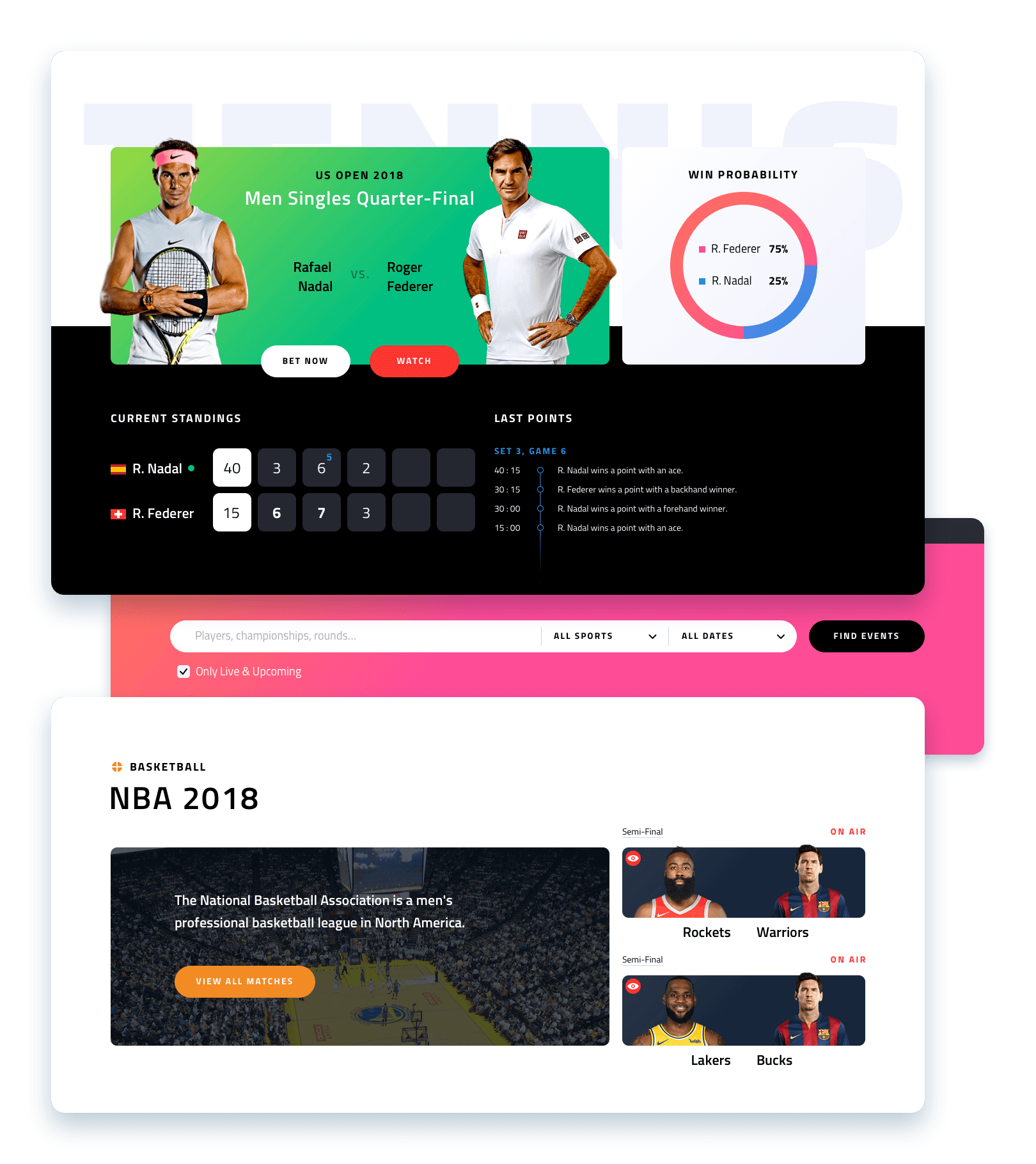
DataArt partnered with a leading sports betting provider in the US to rebuild and scale their live video platform. What began as a system focused solely on horseracing evolved into a multi-sport solution capable of supporting over 10,000 events daily across global and local markets. The platform now offers real-time video streams, game visualizations, race archives, and personalized content based on viewer location and eligibility. Fans can watch live or on-demand events, access detailed stats, and place bets — all from a single interface. This transformation helped the client expand into new markets, increase engagement, and unlock new revenue streams through more immersive in-play betting experiences.
Personalization and Player Engagement
Today’s bettors expect more than just odds—they expect relevance. Personalization has become a defining feature of the in-play experience, as operators leverage AI to tailor everything from bet suggestions to in-game content based on individual user behavior.
For instance, Games Global partnered with Future Anthem to integrate real-time AI personalization across its extensive jackpot content portfolio. Future Anthem’s Audience Identifier module, part of its broader Amplifier AI platform, uses advanced recommendation algorithms to monitor jackpot pot sizes in real time and send tailored marketing messages to the most receptive audiences.
This approach reflects a broader industry movement, where personalization extends beyond marketing into core gameplay and betting functionality. Operators are now using AI to dynamically adjust odds, customize betting prompts, and deliver individualized content at just the right moments — such as when a player’s favorite team takes the lead or when a game hits a decisive turning point.
Similarly, TXODDS has embraced a customer-centric approach to product development, integrating user feedback to continuously refine its offerings:
Balancing Speed with Responsibility
As innovation accelerates, so does the need for responsible gambling measures. Alongside the race for faster data and better engagement lies a parallel challenge: safeguarding player well-being in a high-speed betting environment.

At the SBC Summit Americas 2025, FanDuel introduced a Real-Time Check-In tool, a new machine learning-driven feature designed to enhance player protection across its iGaming and online sports betting platforms.
This tool, unveiled by Cory Fox, Senior Vice President of Public Policy and Sustainability at FanDuel, continuously monitors deposit behaviors, identifying activity that deviates from a customer’s typical patterns. When such variances are detected, the system prompts users to review their deposits and provides options to adjust the amount, set deposit limits, or access their spending history through the My Spend tool. This proactive approach encourages players to reflect on their financial decisions, helping them stay within their budgets and avoid problematic gambling habits.
Ultimately, the evolution of in-play betting is being shaped not just by technology, but by a shared industry commitment to engaging players in safer ways. Those who can balance innovation with trust will be best positioned to lead the next chapter of real-time sports wagering.
Real-Time Risk Management
As in-play betting accelerates, so too does the complexity of managing volatility. Every live wager introduces new exposure, making real-time risk management essential for sportsbooks looking to protect margins without disrupting the bettor experience.
For example, 10star, which offers innovative sports betting risk management solutions, takes a measured approach to real-time automation. In one of our Sports Betting Conversations interviews, Matthew Smith, Head of Modeling at 10star, emphasized that their risk system continuously ingests bet flow and player behavior data to dynamically adjust odds and exposure.

10star’s system uses customer profiling and bet monitoring to identify unusual patterns, fast-finger bettors, and potential courtsiding. These inputs help sportsbooks mitigate risk without immediately limiting players or relying on blunt margin increases. Instead, they aim to reduce volatility through smarter pricing and efficient hold management, even during unpredictable in-play events.
This philosophy also informs their approach to AI. Rather than blindly applying machine learning outputs, 10star blends neural networks with trader oversight to ensure the models make sense in fluid, real-world conditions. This “controlled AI” strategy gives sportsbooks the flexibility to maintain sharp pricing while preventing black-box decisions that could negatively affect the user experience or bottom line.
Conclusion
In-play betting has evolved into a cornerstone of the US sports betting experience, fueled by the convergence of advanced technology, real-time data, and changing consumer expectations. From ultra-fast data feeds and machine learning algorithms to personalized betting experiences and immersive broadcasts, the industry is transforming how fans engage with live sports. However, success will require a careful balance of speed, accuracy, and player protection.
Ultimately, the evolution of in-play betting is about more than just technology – it’s about creating meaningful, engaging experiences that keep players coming back while ensuring a safe and responsible betting environment.
Are you looking to elevate your sports betting operations to the next level? DataArt is here to empower you with cutting-edge solutions that can boost efficiency, expand your market reach, and provide a technological advantage over your competitors. Our team covers every aspect of sports betting software development, from scalable and secure platforms to advanced analytics. Explore DataArt’s strategic sports betting solutions.