With the recession looming, will the travel and hospitality industries be able to prepare for the foreseeable outcomes? Will the downturn slow down, or even stop, post-pandemic recovery? Let us take a closer look at the current situation to understand whether there is room for growth in the travel business today.
It is evident that some large companies are already adjusting to reality. A series of massive IT staff layoffs in late 2022 and early 2023 at Meta, Microsoft, and Alphabet speak for themselves. But according to the New York Times, that is not true for the entire tech industry.
Will the Global Recession Drag Down the Travel Industry?
Looking closely at the travel industry, we see that experts do not predict that the industry’s recovery will be drastically affected by an economic slump. In fact, some optimistic signs in the global economy suggest that the recession might not be that bad, including for travel companies. For example:
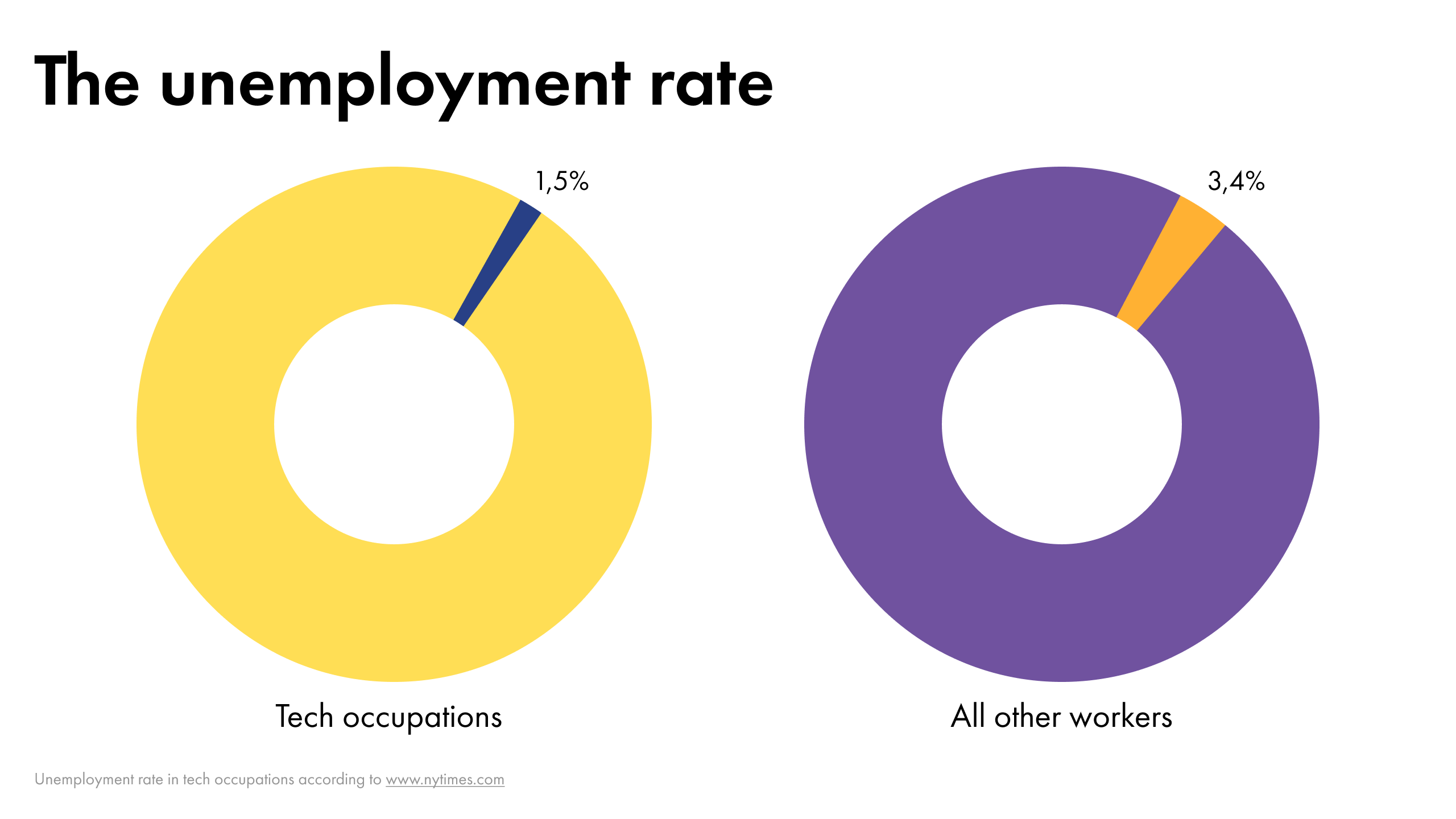
The unemployment rate in tech occupations is 1.5%, compared with 3.4% for all workers (New York Times)
Based on this data, layoffs at Meta, Alphabet, and Microsoft clearly do not have a detrimental (or ripple) effect on employment overall. These reports show that the demand for professionals is still there, even while large companies throw over some ballast, preparing for a crisis.
At the same time, the travel industry is in a counter-cycle to many other industries, one of the benefits of the post-Covid upswing. Consider the following:
Demand for industry players like airlines and cruisesis rising for the first time since 2019, and their post-Covid momentum has enough surplus to carry them through until 2024 or 2025.
After a long period of not being able to travel, globetrotters are increasingly reluctant to cancel their vacation plans: 57% of travelers prefer to reschedule or adjust, rather than cancel, their vacation plans.
As Intrepid Travel CEO James Thornton told Travelpulse: “We might see people traveling more in the off-season, traveling for less time, or going short haul instead of long, but they are still going to have their holiday.”
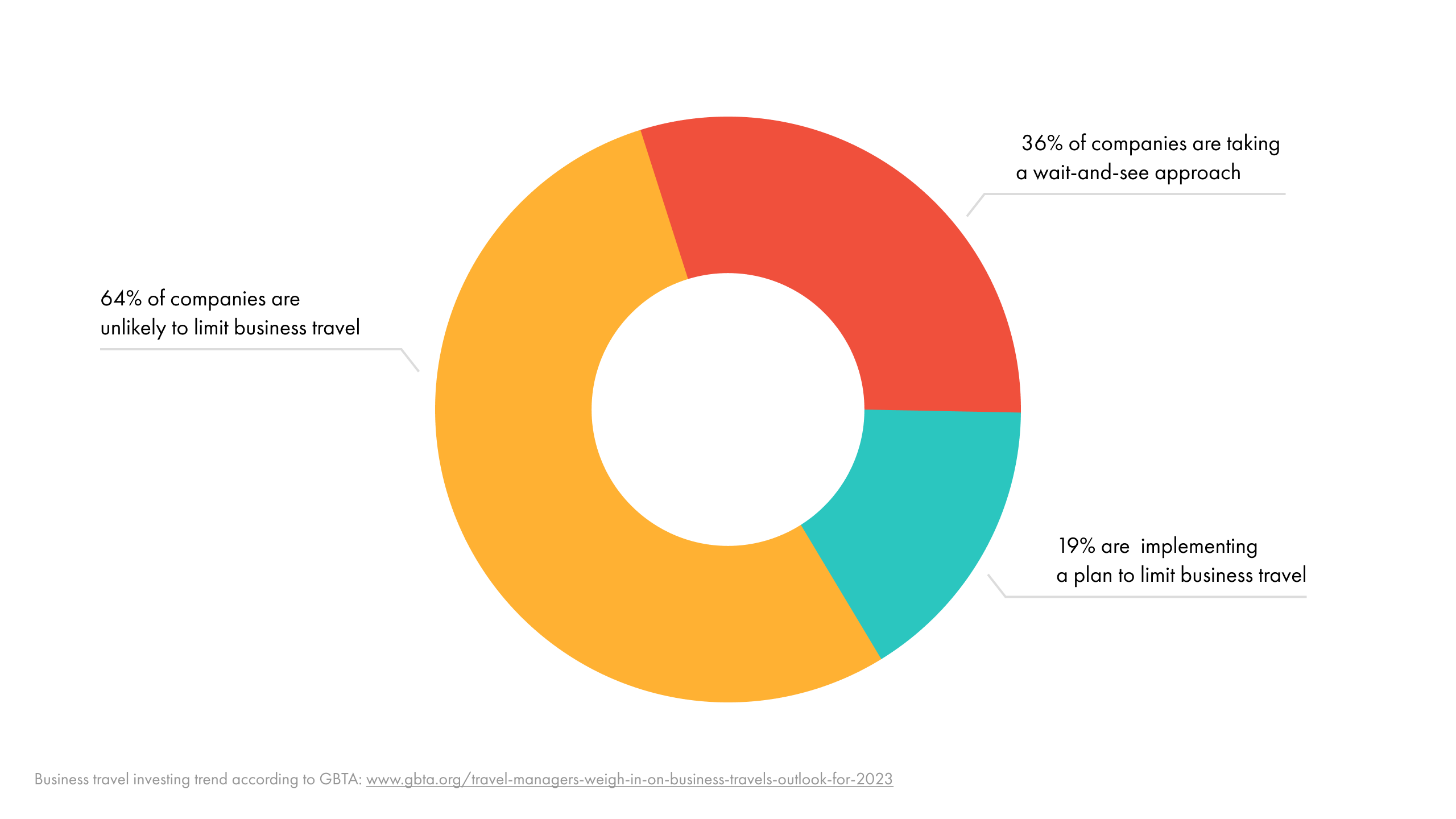
The same trend concerns business travel. According to a GBTA report, 64% of companies are unlikely to limit business travel, although many (36%) are taking a wait-and-see approach and not seriously considering establishing such limits. Only one in five travel managers (19%) are already implementing a plan to limit business travel.
The persistence of “Bleisure” (Business meets leisure) travel is another positive sign for the travel industry. This was underlined in a recent quarterly filing from United Airlines CEO Scott Kirby, who said: “More leisure demand is enabled by hybrid work. Every weekend is a potential holiday. And it’s a permanent increase in demand for weekend and premium business travel.”
What Is the Role of Technology and Innovation During Turbulent Times?
Technology is a key ingredient contributing to a company’s revenue and profits. In recent years, new technologies like cloud computing, data analytics, artificial intelligence, and cybersecurity software have become increasingly mainstream. Companies now see these as vital tools for conducting business.
According to Gartner®, “global IT spending will approach $4.4 trillion in 2022 and grow to $5.7 trillion by 2026 — a 5.4% compound annual growth rate (CAGR) from 2021 through 2026.” Gartner’s prognosis expects demand in particular for Enterprise Application Software, Infrastructure Software, and IaaS.
Regardless of the state of the economy, travel companies need to continue investing in IT, reviving critical and forward-thinking IT initiatives that might have been put on hold during the 2020 pandemic crisis and the 2021 IT labor shortage. Otherwise, it may be challenging for industry players to support the high rate of modernization and innovation throughout the economy since the pandemic.
After the unfortunate and unusual case with Southwest’s faulty employee management system, the airline, unable to handle the force majeure, was urged to make a qualitative leap in modernizing its systems. Today, the company has transitioned to AWS to modernize data warehousing and enable better analytics capabilities to avoid future interruptions.
Hotelbeds has been similarly creative. Recently, the company sent out a call to startup founders with ideas that could solve problems in the hospitality industry. According to their hypothesis, putting innovation at the center of their product development strategy can harmonize all future projects. This approach will potentially allow the brand to better align and synchronize a multilayer customer experience.
In their attempt to comply with customers' post-Covid expectations for self-service and personalization that have already been implemented in industries like retail and media, cruise ship companiesare using technology to reduce face-to-face contact. Royal Caribbean invites passengers to check in by taking a selfie, scanning their passport, and choosing from a list of staggered arrival times. MSC Cruise uses an artificial intelligence (AI) wizard to guide passengers through a self-service check-in procedure.
What Is the Best Way to Invest in IT During a Recession?
As some of the economy’s most hard-hit sectors during the pandemic, the travel and hospitality industry wants to find a recession-proof recipe for investing in and fostering innovation to maintain their current momentum.
There are two potential approaches industry organizations could choose to boost technological development while mitigating investment risks:
Smart recruiting to attract IT professionals on the market after layoffs to wisely invest in homegrown tech projects.
With large companies – mostly those in products – dismissing their IT talent, travel companies could use this opportunity to fill critical IT positions they have been without. This will enable them to revive tech initiatives that they had been forced to pause due to the pandemic.
But this strategy has some pitfalls. If taking this approach, businesses need to be aware of hiring professionals with no domain experience. Because of this knowledge gap, these professionals will be unlikely to speed up innovation in travel.
DataArt’s head of Travel and Hospitality Greg Abbott calls this problem “the great brain drain.”
The problem is that travel companies now keep hiring people who do not know anything about travel. This complicates the development process, slowing down the speed at which you can tackle problems. This is particularly notable in the business travel sector, which has not fully re-captured pre-Covid rates. Though the leisure travel sector has almost fully recovered its 2019 numbers, business travel has not yet – it’s still 60-70% of what it used to be before the pandemic. Logically, people do not want to work in a lagging industry, and companies, in turn, do not have the money to pay for the number of people they have to support. They critically need to invest in IT.
Greg Abbott
DataArt’s head of Travel and Hospitality
Partnership with a technology vendor, like DataArt, who can help you optimize costs and scale up when you need it – but can then quickly pivot if the recession worsens.
DataArt Managing Director Alexei Miller frames things this way:
Companies in which software development is not the core competence have projects with their own cycles, and they need to be able to ramp up quickly or scale down as necessary. Internal teams can’t offer such flexibility. Often, the cost savings are illusory because, in addition to direct costs such as taxation, immigration, and compensation, companies need to calculate the cost of hiring, retention, licensing, and the expense of maintaining a team somewhere safe. DataArt charges a premium for taking care of all these things, and this premium needs to be weighed against the cost of ownership for an internal agency, which is frequently underestimated. As technology becomes more complex, this becomes even more the case.
Alexei Miller
DataArt Managing Director
How Can DataArt Help?
Since many travel companies specialize in tourism and not IT, they are likely to face some challenges along the implementation journey. This is where DataArt, as a software development and consulting company, is ready to help travel companies with their IT initiatives.
As an IT company with more than 25 years of experience, we have worked on thousands of projects that drive businesses forward, with proven methodologies to bring tech projects to successful implementation. We build teams for clients from our staff of top-quality engineers based on the unique criteria of the company, their business needs, and any other specific requirements. Up to 20% of DataArt’s software delivery professionals have experience in the travel, transportation, and hospitality domain, 60% of whom are at the senior level. Domain experience coupled with robust onboarding procedures and processes ensure a much faster start compared to the rest of the industry, high software engineering quality, and predictable project outcomes.
We know how to plan and accomplish software projects from end to end: how to scale teams up and down, how to manage requirements, which tech stack to choose, and how to bring an IT initiative to an end rather than stretching it out for years. We will be fully responsible for ensuring that your company’s IT project is completed on time, on budget, and on scope while you can concentrate on doing your core business.
If you want to make sure your investments pay off, contact us, and we will make your IT projects happen.
Subscribe to Our Newsletter
Subscribe now to get a monthly recap of our biggest news delivered to your inbox!
By clicking 'Accept All Cookies', you agree to the storing of cookies on your device to enhance site navigation, analyze site usage, and assist in our marketing efforts. More information
Privacy Preference Center
When you visit any website, it may store or retrieve information on your browser, mostly in the form of cookies. This information might be about you, your preferences or your device and is mostly used to make the site work as you expect it to. Because we respect your right to privacy, you can choose not to allow some types of cookies. More information
Manage Consent Preferences
Strictly Necessary Cookies
Always Active
These cookies are necessary for the website to function and cannot be switched off in our systems. They are usually only set in response to actions made by you which amount to a request for services, such as setting your privacy preferences, logging in or filling in forms. You can set your browser to block or alert you about these cookies, but some parts of the site will not then work. These cookies do not store any personally identifiable information.
Functional Cookies
These cookies enable the website to provide enhanced functionality and personalisation. They may be set by us or by third party providers whose services we have added to our pages. If you do not allow these cookies then some or all of these services may not function properly.
Targeting Cookies
These cookies may be set through our site by our advertising partners. They may be used by those companies to build a profile of your interests and show you relevant adverts on other sites. They do not store directly personal information, but are based on uniquely identifying your browser and internet device. If you do not allow these cookies, you will experience less targeted advertising.
Performance Cookies
These cookies allow us to count visits and traffic sources so we can measure and improve the performance of our site. They help us to know which pages are the most and least popular and see how visitors move around the site. All information these cookies collect is aggregated and therefore anonymous. If you do not allow these cookies we will not know when you have visited our site, and will not be able to monitor its performance.