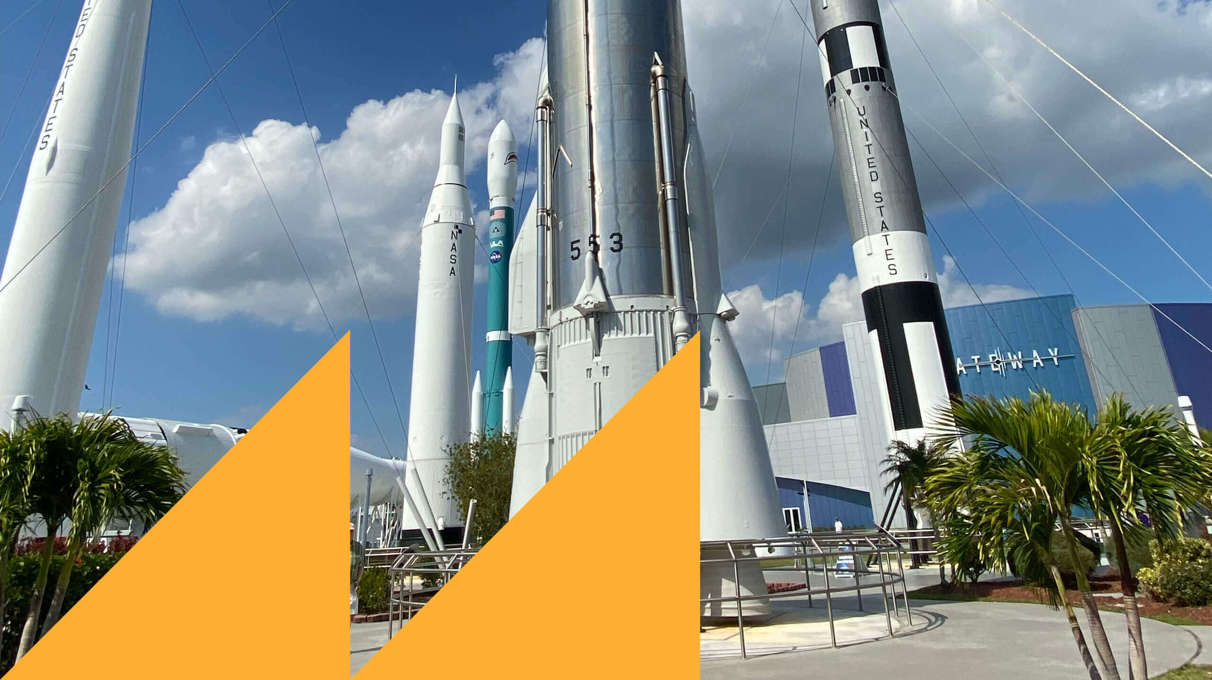
The event blended business with fun, team-building activities at NASA’s Kennedy Space Center, expert panels and workshops on leading topics of the day, and scrumptious dinners in the luxurious setting of Orlando’s Ritz Carlton Grande Lakes resort.
Attendees and organizers alike agree this inaugural event was a full success. As such, it will serve as a blueprint for many more, and we look forward to sharing details as they become available.
“AI/ML – Separating myth from reality“ by Yuri Gubin
At February’s Client Advisory Board Summit in Orlando, Florida, I was unsure what to expect from the attendees of the AI/ ML session. Audience reactions to this topic usually fall into one of two extremes: hyper-engaged and knowledgeable or disengaged and somewhat overwhelmed by this evolving technology. To my delight, the audience proved to sit along a spectrum of engagement, with lively participation, earnest questions, and insightful anecdotes, making the session rewarding for everyone – including myself.
The key theme of the talk Brad Fisher and I presented on the subject was that AI and ML are high-risk, high-reward technologies. The main challenge for companies to overcome is the resistance to applying these new methodologies and capabilities to areas of an organization that are, in themselves, high-risk. But it is these perilous operations that typically yield the highest rewards for a business if they are done right – and AI can play a significant part in this.
The past two years alone have seen a large drop in the costs and risks involved in employing AI and ML. It used to be that the investments in the data scientists, equipment, and technology needed to develop these new features were prohibitively high for most businesses. As a result, only very few organizations were able to leverage the technology. Now, AI products are in the public domain and increasing in number almost weekly. The barriers to entry have been significantly reduced, offering more companies than ever the opportunity to explore what AI can offer them.
DataArt’s position is that the best way to ensure organizations can leverage AI for growth is to have AI and ML governance in place. This involves SOPs for processes like data collection, regulatory compliance checks, budget signoffs, and prototyping. Governance can facilitate AI development and implementation because it speeds up the building and testing of new AI technologies. IT teams that are unburdened by needlessly delayed internal processes are empowered to experiment with prototypes built in days rather than weeks and months. Companies should be working on that as a first step toward leveraging AI technology.
It was great to hear from clients who are already making strides in this area - as well as those clients who have concerns or struggle to get off the ground. From the discussions, it does seem that frameworks and processes are as important as resources on this journey. The exciting news is that 2023 looks to be the year that resources will become increasingly accessible, leaving organizations to focus more on the other two areas.
With this in mind, our DataArt team looks forward to next year’s event, when we are likely to be reviewing not only the impressive technological leaps of 2023 but also taking a closer look at the companies that managed to leverage AI effectively.

“Global delivery on steroids: running development teams in 2023 and beyond” by Greg Abbott
I never doubted that in-person events would make a comeback after Covid’s two-year stranglehold on meetings and travel. As the head of DataArt’s Travel, Transportation & Hospitality industry vertical, my optimism should not come as a surprise – but it was sorely tested when our Client Advisory Board Summit was moved not once but twice due to the pandemic.
When it finally did take place in late February of this year, misfortune struck once again as I came down with a bug (of the non-covid variety) that nearly incapacitated me. Still, our session on IT delivery and staff management in a hyper-globalized world went ahead. In addition to my humble contributions, it featured expert insights by my DataArt colleagues Alexei Miller, Alistair Wandesforde, and Apurva Mathur.
While each company is unique, CTOs tend to have common experiences in IT delivery. The hyper-globalization of recent years has produced an unprecedentedly distributed workforce, impacting project and people management in equal measure. Add to this the unrelenting move towards the cloud and accelerating advances in AI and ML, and IT delivery is an area ripe for a shake-up.
For our team, it was important to create a forum where attendees could share the challenges and achievements of their digital journeys with peers. Equally important was offering a safe space for clients to be candid with DataArt about their customer experience.
An exclusive client event and the candor a forum like this inspires is always also a source for hard truths and necessary lessons for the host organization. Our team heard from long-term as well as newer clients, and the feedback they provided was invaluable for improving services across the whole client portfolio. We learned that not every client is fully aware of the breadth of the services DataArt offers, nor are all client experiences equal – so in addition to plenty of ideas for next year's summit, we also come away with some important tasks for the organization.
With remote workforces, AI/ML, and cloud trending in February’s session, next year's event is sure to evaluate how companies will have responded to these trends. In fact, we are already seeing an increasing tendency to rein in remote work and a growing appetite to apply AI and ML to IT projects. When asked for my predictions of AI’s impact on IT delivery, I am optimistic: instead of replacing IT services, I see the new technology increasing the demand for them. However, companies will have to establish themselves as confident operators of AI quickly if they want to reap the benefits of this revolution.
If you are interested in future events, contact us for more information.