Our team will reach out within 24 hours to gather your project requirements, clarify your business objectives, and outline the next steps in our collaboration.
Client
The client has developed a method utilizing infrared laser and Artificial Intelligence (AI) technologies for non-invasive early-stage malignant melanoma detection, also known as dermatofluoroscopy.
Business Challenge
The main challenge was to create a class IIa medical device tailored for melanoma detection, intended for use in EU and USA studies. The device must demonstrate precise levels of specificity and sensitivity to accurately classify pigmented skin lesions as either malignant or benign.
Solution
Engaged in solution design, DataArt took ownership of software development across frontend, backend, and embedded (middleware) architecture and implementation.
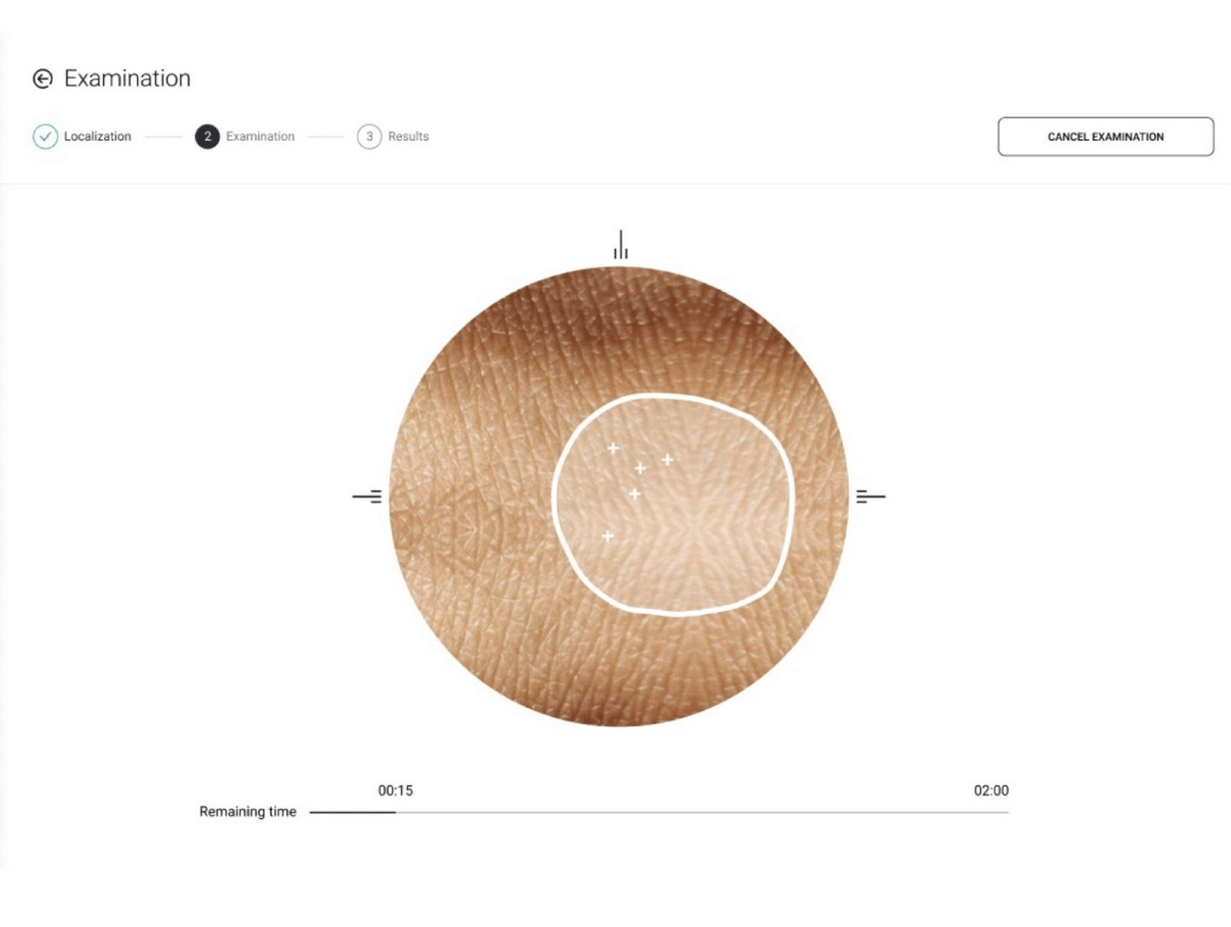
Within the front-end development, our team was responsible for UI and UX for a touchscreen-manageable app. We collaborated with the industrial design team and conducted prototype usability testing.
The core of embedded development centered on the creation of a photonic controller, which is responsible for real-time laser operations and hardware control in the patient interface unit.
To ensure patient safety with the laser, it was crucial to enable real-time operations of hardware and processes with embedded and Java applications using the real-time operation system, RTS, which combined Debian 10 OS and RTS.
DataArt’s Artifical Intelligence Solutions
Learn more about DataArt’s Artifical Intelligence Solutions
Learn MoreHighlights
- RTS enabled real-time laser and dermatoscopic camera operations.
- Hardware integration utilized Protobuf, TCP/IP, and Moxa.
- Supported online and offline operations.
- Development followed QMS guidelines in Agile increments under V-model.
- Effective project management and communication with hardware vendors.