ChatGPT: The Word of the Year?
Back in 2022, when OpenAI introduced ChatGPT-3 to the world, it changed the tech landscape from scratch and brought AI into the lifestyle of millions of people.
Right now, Generative AI is considered a key solution to almost any problem. This new form of AI is significantly impacting every industry, especially EdTech.
However, looking at it from a business angle, there are still several questions: How significant will Generative AI be for the future of EdTech? Will it continue to shape the industry as we know it, or take on a new form altogether? And crucially, is EdTech's future as connected with Generative AI as it seems?
Here are my lessons learned and thoughts on the future trends you should pay attention to.
In 2008, I started my first project related to Education technology. It might sound wild today, but it involved developing a Sony PlayStation mini-game called "Test Yourself." Surprisingly, it became the third best-selling indie game on the Sony PlayStation network in 2011.
What is interesting is that there was no AI in it. Quite difficult to imagine this when almost every other startup today claims to be powered by AI.

Now, let's return to our main topic.
In this article, I will explore an emerging trend that presents a challenge to established and traditional EdTech companies. As we examine the significant influence of generative AI in education, I will uncover the transformative keys to success that lie within.
However, for now, let's keep some intrigue.
The ChatGPT-Free Perspective on the Future
You may wonder why I mentioned “ChatGPT-Free” in the heading. Any ideas?
At first glance, ChatGPT appears to be a flexible tool that provides valuable insights and generates innovative business ideas. With a simple prompt like "What are the main applications of generative ai in EdTech?" you can receive a comprehensive list of 10 to 12 bullet points accompanied by a summary, all within seconds.

While this may seem impressive for certain purposes, such as school presentations or small content writing efforts, it falls short when making critical business decisions.
The problem arises from the generic nature of its responses. Although the information is correct, it often represents well-known facts and lacks the complex reasoning analysis typical for human beings. In other words, while its forecasts are accurate, they lack the necessary depth and innovation to provide truly insightful business predictions that can drive unique strategic decisions.
For example, the top three trends identified by ChatGPT in EdTech are AI, microlearning, and VR/AR.
- Are these trends relevant?
- Absolutely, yes!
Technologies like AI, microlearning, gamification, and VR/AR have become essential components within the education industry and will continue to be so for decades.
- But does this prediction hold a unique business insight?
- Definitely, no.
Complementing, Not Replacing: The Role of Generative AI in EdTech
My experience with AI in 2009 helped me notice how people perceive it.
Even the slightest indication of intelligence can lead individuals to attribute a sense of meaning to these artifacts. It seems that deep down, we as humans seek guidance from an all-knowing oracle and want to delegate the burden of decision-making to it.
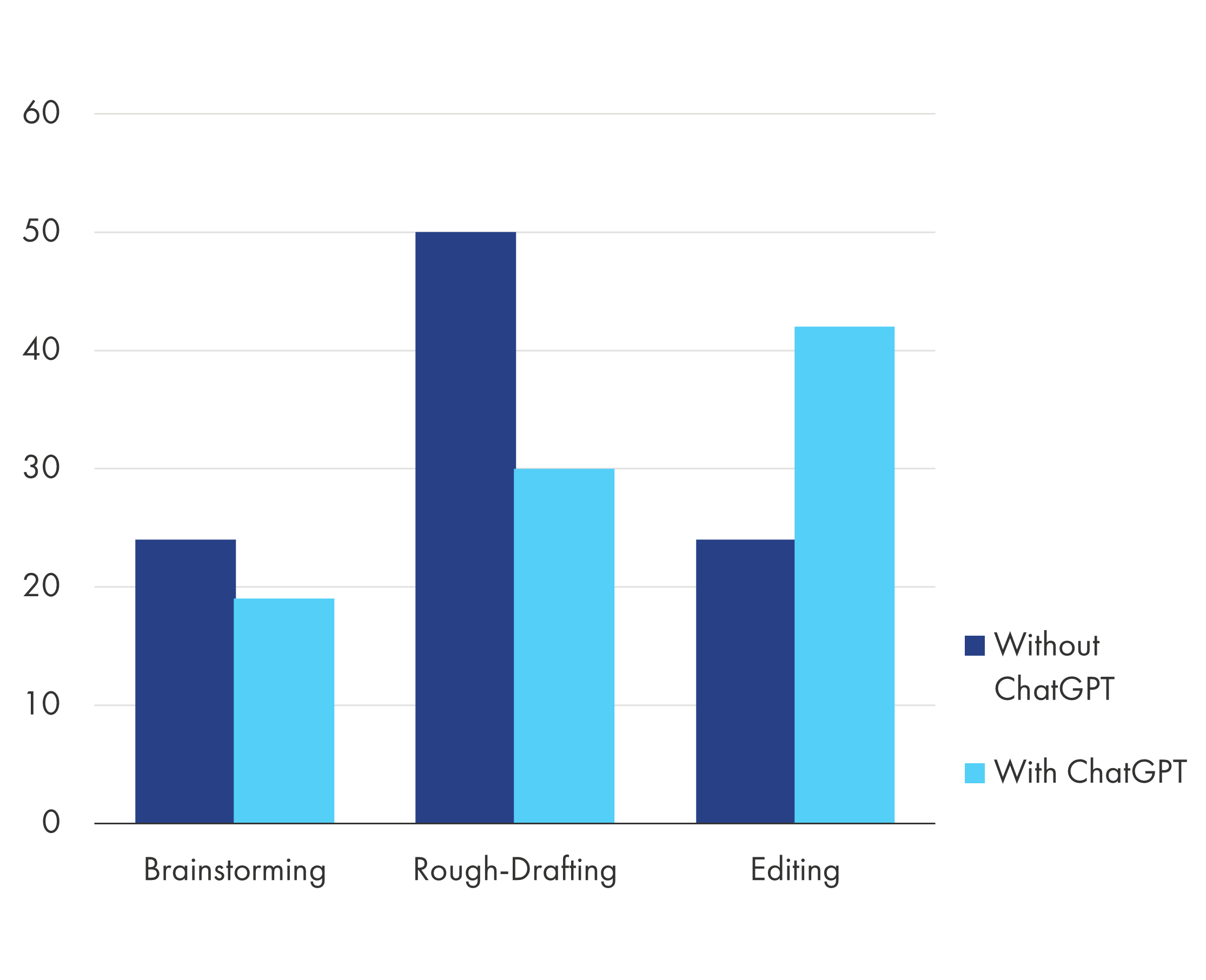
A study I came across recently reveals interesting results on the impact of ChatGPT-4 on productivity. The research shows that using ChatGPT for ideation, which involves generating large quantities of logically consistent text, significantly increased productivity. However, when attempting to use it for problem-solving purposes, productivity dramatically decreased.
It's important to remember that LLMs like ChatGPT are not oracles but tools. They cannot replace humans—at least not yet—but they can be immensely helpful.
Again, AI is a must-have now.
The real question isn't whether to use it or not – that's a given. But instead, what strategies and approaches should we adopt to make AI work effectively for us?
AInnovations on the Horizon
So, what exactly is this emerging trend that could be the deciding factor between success and failure in the EdTech sector for 2024?
This brings me to a recent personal experience. I sent out a business email, and, to my surprise, I made no grammatical mistakes.
This was a pleasant shock for me as English grammar has always been challenging, and I’m used to double-checking my emails. Despite not enrolling in any grammar courses, I noticed an improvement in my writing skills.
The secret? I consistently use Grammarly to check my emails and documents. This tool provided me with the kind of improvement I would typically expect from formal learning but without the actual learning process. Cool, right?
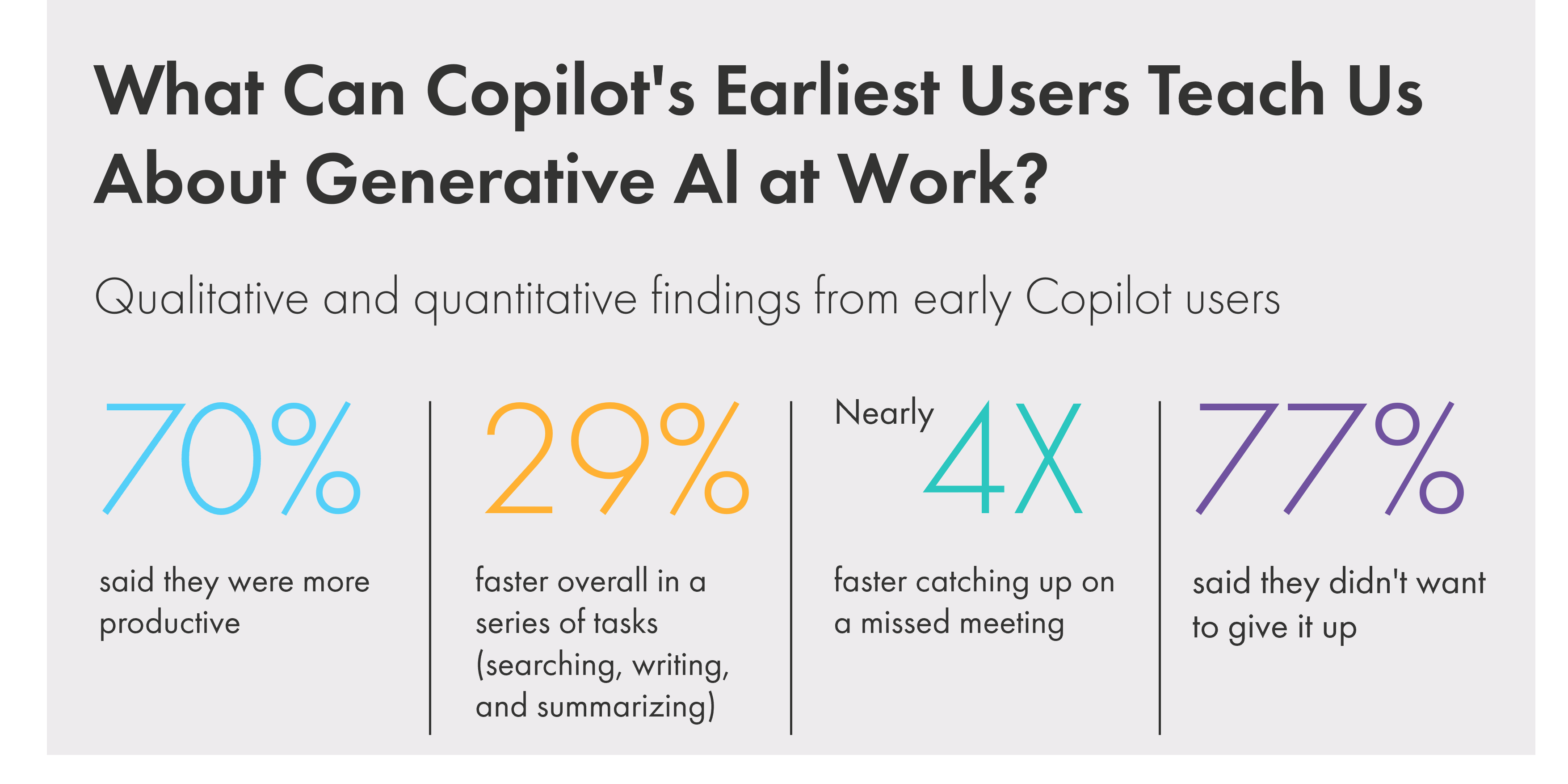
So, the breakthrough trend for EdTech companies in 2024, which I want you to take note of, is the concept of the Copilot.
You have probably heard about it, but not in the EdTech context.
In a nutshell, a copilot is an AI assistant that helps the user do their job. The trend became sound when Microsoft embedded such technology in GitHub to assist developers in writing code.
Despite being a trending topic today, ChatGPT never gives you this insight as an EdTech trend because, as mentioned previously, it does not generate problem-solving insights but rather generic outputs.
Today, nobody classifies copilot as an EdTech trend, and this is a point. In my opinion, the GitHub copilot and Grammarly are warning signs for our industry.
Soon, we will see a copilot feature becoming a staple in productivity tools. Imagine your CRM system not just managing contacts but helping you write emails that really engage. Or consider Google Calendar, not only organizing your schedule but also actively assisting in managing your time better. This could be the game-changer we all need for striking that perfect work-life balance.
Here's where it gets even more interesting. The Copilot approach is a perfect workaround for the limitations of Large Language Models. You've probably heard of 'hallucinations' or biases in AI-generated content that are out of context or irrelevant. If you've ever tried using AI to create a complete product, like an online course, you'll know these challenges too well.
But the Copilot works differently. It suggests, say, a code snippet or a grammar correction but leaves the final choice to the user. It's not an all-knowing oracle but a collaborative partner, and the concept significantly reduces the technology's limitations. Mistakes can happen, but they're part of the process, expected and acceptable from a human perspective. That's why I believe Copilots will soon become an integral part of our digital landscape, marking a significant shift in EdTech.
This evolution poses a considerable challenge. If productivity tools can enhance my skills without needing dedicated learning time, why would I or my employer invest in traditional educational services? It seems like traditional education might lose a significant market share.

So, what's the move for those running EdTech projects? Should you resist or adapt?
My advice: lead the change you can't prevent. Start integrating Copilot features into your offerings. Understand how they work, improve them, and become a leader in the field. Don't fear technological shifts, including the AI revolution. Remember, AI isn't replacing humans; it's replacing those who refuse to adapt.
Maybe I’m so optimistic because I’m too old. I saw with my own eyes how digital transformation came to the enterprise segment.
The case study I’m talking about is when a large factory shifted its accounting from paper to digital systems. The accounting department was split into two parts: some refused to adapt, while others embraced the change and upskilled. The outcome was predictable – those who adapted thrived, while the others didn't. Interestingly, the decision to adapt had little to do with age or education.
Some young accountants decided to leave, not accepting the change, and some old ones decided to try to work in a new way.
And what do you think about the number of accountants after the digitalization?
Surprisingly, the department staff increased in a very short time after the changes! Digitalization appears to bring more work because it provides much more data to analyze. But let’s get back to copilot.
Disruption from the productivity side is scary, but you – Education professionals - have an advantage, too: instructional design.
You know how to create engaging educational content. Now, it's about reshaping and combining this expertise with AI.
Let's imagine what it could look like. Assume you run an online Math school.
Typically, there are three main roles in educational projects. These are, of course, a user (student), an instructional designer (who creates content), and a tutor (who conducts lessons and supports the learning process with homework review).
For students, integrate practical classes with a Copilot, like proving a set of theorems. For instructional designers, embed a Copilot in your authoring tools. And for tutors, make their lives easier with a copilot lesson planner or homework checking and grading.
Here is the project’s high-level roadmap:

- Step 1
Start by planning your platform architecture and roadmap. At DataArt, we call it solution design, and it is worth doing. Usually, it helps to save up to 30% of development costs and make results predictable.
- Step 2
Build copilot teaching solutions for instructional designers. They already use AI-based tools, so they look like ideal early adopters.
- Step 3
Build tool for tutors. They feel pain whenever they open the next homework, so they will be happy to semi-automate this part of the work.
- Step 4
Students are your most important users – they pay for your service. I suggest building this part of the solution later so you have enough experience. Use insights from earlier phases to develop student-focused features.
- Step 5
Now that your data streams are integrated with an AI-powered solution, and assuming you've nailed the solution design, you'll be sitting on a goldmine of insightful data. It's time to use this data to consistently refine all your processes. This is where the magic happens, setting your business on a path to shine.
One important accent I’d like to set here: this solution must be AI-first. Today, many companies try to adopt LLM, making the same mistake – integrating AI assistants without redesigning the core solution. This approach fails to generate meaningful value for business.
Case Study Time
One large IT company, which I can't specifically name, developed an AI-powered education tool based on ChatGPT and integrated it into their Learning Management System. This allowed students to ask their questions while studying. Technically, the system worked just fine. However, a closer look at how it affected learning effectiveness showed a surprising twist: students' performance actually got worse.
It turned out that this AI bot, rather than helping, was eating into valuable study time and proved to be more of a distraction. In simple terms, the assistant morphed into a time-consuming gadget rather than a useful tool.
To avoid such a scenario, starting with the right design approach is essential. It's not just about adding new tech to your platform but rethinking your students’ entire learning process. The aim should be to figure out how AI can truly support them in reaching their learning goals, not just be a flashy add-on.
To Sum Up
My short answer to “what’s next in EdTech” is AI-first copilot-style learning platforms. This approach looks like an ideal combination of today’s AI technology level and market (or, better say, learners) expectations. Still, it requires a deep redesign of core EdTech solutions to make a difference in this field.