
In the recent webinar titled "How to Best Leverage Emerging Technology for Enterprise Cost Optimization," DataArt, together with Everest Group, showcased cutting-edge findings and case studies on maximizing technology for business efficiency. The webinar featured Yuri Gubin, Chief Innovation Officer at DataArt, Mayank Maria, Vice President at Everest Group, and Scott Rayburn, Vice President of Marketing at DataArt as a moderator.
Emerging technologies like advanced automation, big data analytics, and generative AI have become top priorities for enterprises looking to enhance their digital capabilities, making cost optimization strategies achievable through streamlined processes. According to Everest Group's research, these technologies can boost productivity in software development by up to 45%. However, organizations are encountering significant barriers in realizing the full benefits of these technologies, including vision and planning deficits, data management issues, and governance gaps. The webinar explored these challenges, showcasing how strategic planning and collaboration with partners like DataArt can help enterprises adopt these technologies effectively to streamline processes, cut costs, and boost revenue.
Cost Optimization Strategies Take Center Stage for Enterprises in 2024
In the latest Everest Group survey conducted with CXOs from leading Fortune 1000 enterprises, nearly 300 to 350 executives shared their insights at the outset of 2024, providing valuable data on business priorities, anticipated challenges, and projections for technology spending. Their responses revealed that cost and margin pressures are paramount concerns for enterprises this year.
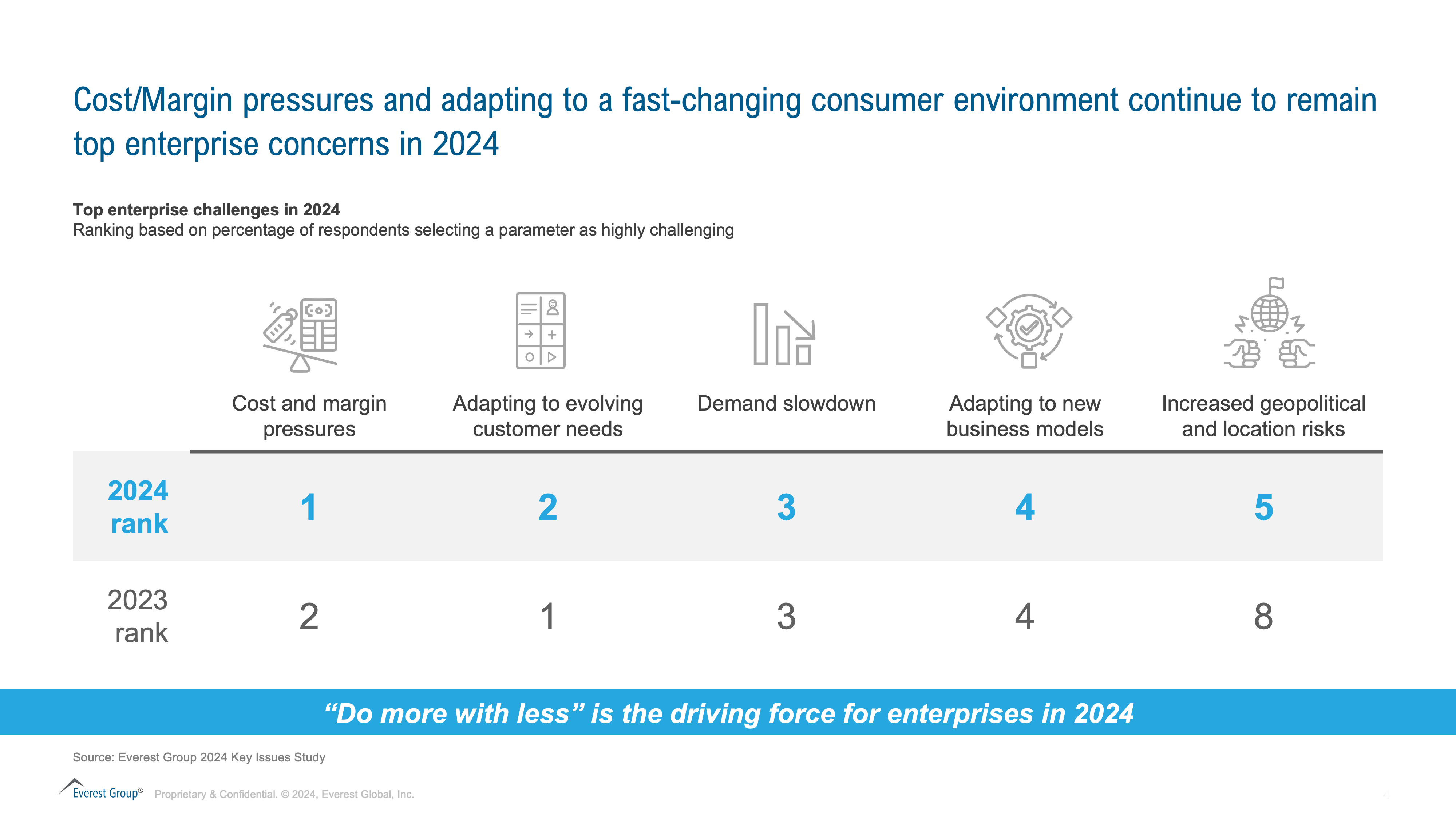
As companies navigate the uncertain economic climate carried over from 2023, optimizing costs and preserving profit margins have become urgent priorities. While growth and agility to meet customer demands remain important, managing expenses effectively has become a central theme for 2024. In this context, enterprises are seeking to enhance efficiency and productivity, striving to achieve more with fewer resources amid ongoing global tensions.
Priority Investments in Emerging Technologies for Enterprises in 2024
Based on the same survey, cybersecurity and cloud solutions emerge as consistent front-runners, with the cloud serving as a foundation for many other advancements. Notably, three of the top five investment areas – advanced automation and cognitive technologies, big data analytics, and generative AI – are primarily chosen for their capacity to streamline operations and enhance efficiency, supporting robust cost optimization strategies by automating processes and reducing errors. Generative AI, in particular, marks its entry into the top five in 2024, highlighting a shift in focus towards technologies that not only improve but revolutionize process optimization.
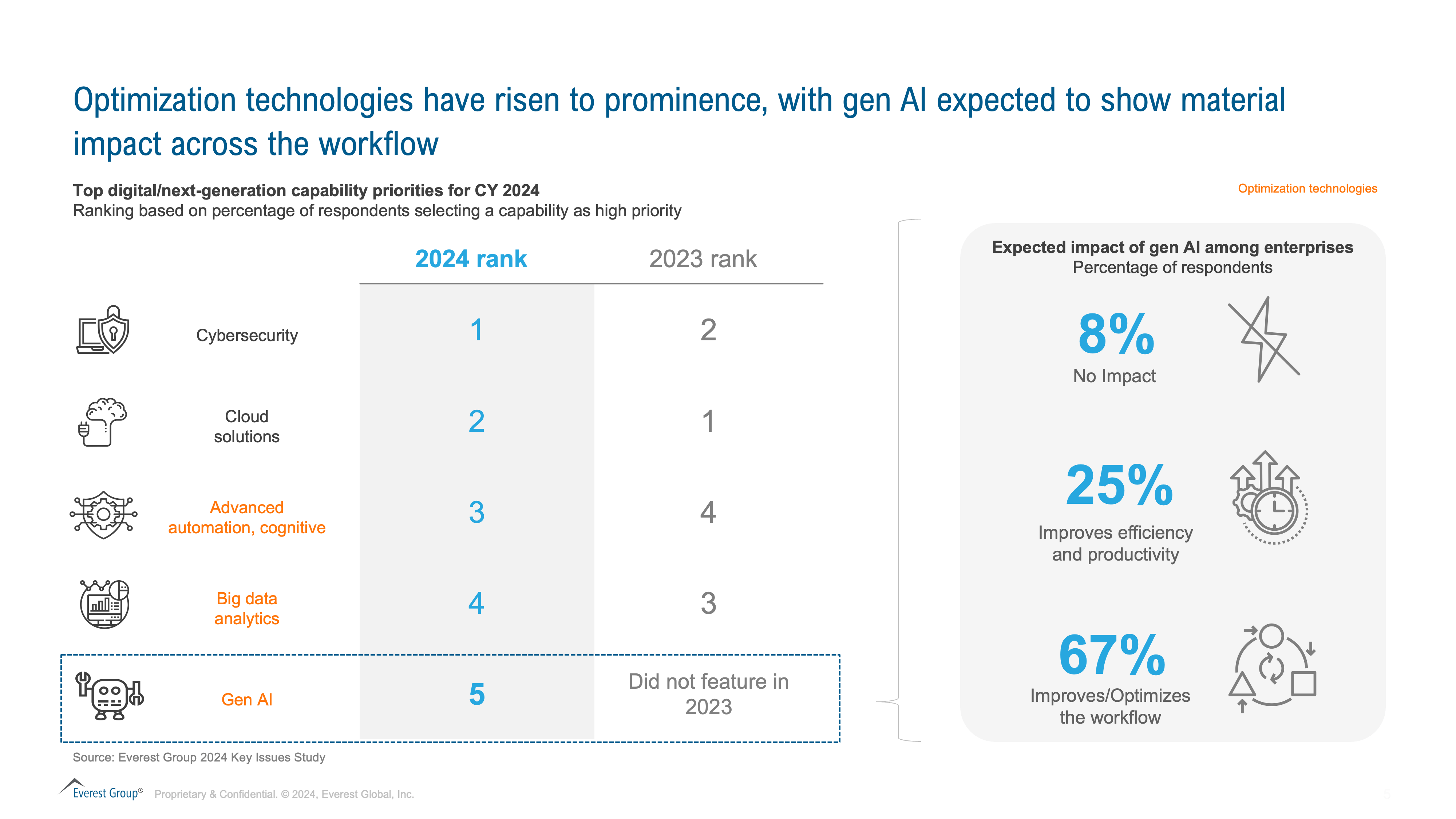
Significantly, the adoption of generative AI has surged, with a mere 8% of respondents reporting no tangible impact from their generative AI proofs of concept. In contrast, a substantial 25% have observed fair improvements in task productivity and accuracy, underscoring the technology's effectiveness. A dominant 67% indicates that generative AI is not just enhancing but transforming their business processes, minimizing the need for human intervention and propelling process evolution.
The Current Landscape of Process Optimization Technologies
Exploring the process optimization technology landscape provides intriguing insights into its evolution. Robotic Process Automation (RPA) has long been established as an effective tool for managing structured data and routine tasks, but its utility faces limitations with complex data interactions.
The advent of AI, particularly generative AI, has expanded this scope introducing layers of additional value to RPA and facilitating more intricate and sophisticated process optimization. These technologies enable enterprises to handle unstructured data productively and provide more accurate forecasting and predictions. Noteworthy advancements include the generation of synthetic data, enhanced information summarization, and more nuanced conversational interfaces. The resulting operational paradigm sees foundational RPA capabilities enhanced by AI's depth and generative AI's innovation. Enterprises today are moving towards a cohesive strategy, centralizing initiatives, and promoting knowledge sharing across business units to increase the returns from these optimization technologies.
Benefits of Optimization Technologies
Optimization technologies provide benefits across three tiers. The initial tier involves improving core business processes such as sales and marketing, human resources, supply chain management, and financial operations. The second tier focuses on integrating these technologies within software development to refine the tech engineering lifecycle.
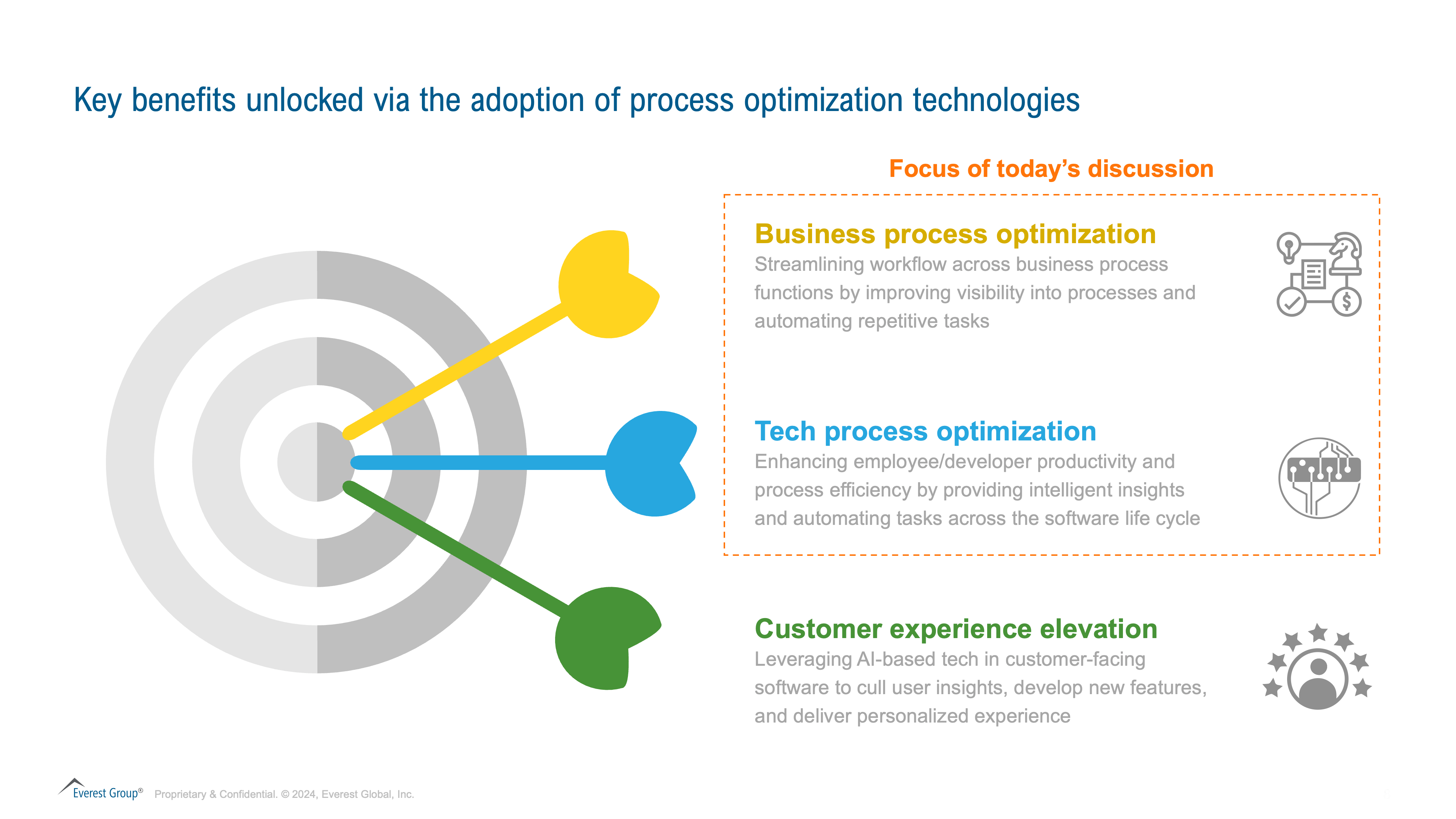
The third tier, still in its early years, explores employing these technologies to create innovative product features and extensions that could dramatically improve the user experience of software products. While AI has been implemented in some areas, generative AI opens new avenues for product enhancement, currently being explored through initial use cases.
Challenges for Enterprises
Enterprises are facing numerous challenges in exploring process optimization technologies that can hinder their ability to explore these tools' full potential. A critical stumbling block is the initial selection and prioritization of use cases. Without a clear vision for scalability and an understanding of who benefits organization-wide, the value of optimization efforts can be significantly compromised. The importance of choosing the correct use case to address and having a comprehensive strategy that encompasses an enterprise-wide benefit cannot be overstated.

Another pressing issue is governance. Effective governance is essential, involving the evaluation of optimization initiatives, resolving persistent challenges, and establishing fundamental protocols around tool and technology usage and data sharing within the enterprise. A common shortfall is the absence of clear guidelines, which impedes the ability to scale up successful use cases properly. Data quality and accessibility are crucial to success, with challenges including compartmentalization, ethical and regulatory compliance issues related to data utilization, and the variety of data-related technologies demanding a broad spectrum of skills, that organizations may find challenging to cultivate or acquire.
Overcoming Challenges to Implement Cost Optimization Strategies
To mitigate challenges in implementing optimization technologies, enterprises should employ a strategic framework to prioritize use cases and processes. This framework should evaluate two primary dimensions: The potential for improvement within a given process, which varies based on current process efficiency, existing technology utilization, and user experience feedback. The second dimension measures the overall business impact potential of the process, determining its significance by the breadth of user reach, frequency of process execution, and associated operational costs.
Encouraging citizen-led discovery can also provide invaluable insights, ensuring optimization efforts align with real, on-the-ground challenges instead of being solely dictated by industry trends. This bottom-up approach not only ensures relevance but also fosters early buy-in from users, setting a strong foundation for broader implementation. Governance structures should reflect the scope and scale of its optimization initiatives, allowing individual business units to explore suitable technologies such as AI, generative AI, and RPA, and to monitor progress autonomously.
The Role of Service Providers in Optimization
Service providers such as DataArt are crucial in the optimization landscape, offering their invaluable expertise in developing tailored cost saving strategies to enterprises navigating process enhancement complexities. They are increasingly developing advisory services to guide enterprises in prioritizing use cases, aligning technology selections, assessing data readiness, and establishing governance frameworks. These partners are concurrently expanding their talent pools to adeptly manage emerging tools and technologies across diverse data initiatives. By combining advisory support with scalable expertise and fostering robust partnership networks, they also contribute to proprietary intellectual property and frameworks that are invaluable for enterprises embarking on optimization initiatives, thereby playing a pivotal role in enabling businesses to unlock the full potential of their investments.
Conclusion
For a more in-depth understanding of how to best leverage emerging technology for enterprise cost optimization strategies, check out the full webinar recording below: