
As the business landscape adapts to this new reality, the travel industry is also undergoing transformative changes. Virtual assistants now can plan comprehensive travel itineraries, and chatbots are becoming increasingly proficient in handling support queries. The revolution in intelligent technologies, exemplified by ChatGPT, has already started reshaping the way we travel. We can now book flights, manage baggage, communicate with hotel staff in unfamiliar languages, and even take virtual tours of unseen cities, all thanks to the power of artificial intelligence. The tourism of the future is already unfolding before our eyes.

In this article, we delve deeper into the realm of AI in the travel industry, examining its current impact and future implications.
Early Adoption of AI in Travel
Smart technologies like AI have driven the travel, hospitality, and leisure sectors forward, particularly during the pandemic. These technologies have opened doors to new business models, customer touchpoints, and value opportunities.
From a customer perspective, AI and robotics offer structured, automated services, delivering seamless interactions and enhanced experiences that surpass expectations.
From a business standpoint, these technologies can support customer engagement, deliver personalized services, secure data acquisition for enhanced privacy and security, and boost employee productivity and efficiency by optimizing operations.
The once-novel chatbot technology has now taken center stage, gradually replacing human support teams. A survey by Ubisend reveals that consumers no longer differentiate between assistance from bots or call centers, with 48% of respondents expressing this sentiment.
A remarkable example of successful chatbot technology in the travel industry is Juliet by WestJet, which handled 74% of client support requests before the pandemic. Even as travel restrictions intensified, Juliet seamlessly managed a 45-fold increase in inquiries, demonstrating its capacity to meet surging demand.
All Eyes on AI
The impact of AI on businesses extends to transforming their operations, making them more agile and efficient. Forbes Advisor's survey indicates that companies leverage AI across various business management aspects. Notably, 53% of businesses use AI to enhance production processes, 51% for process automation, and 52% for optimizing search engine rankings through tasks like keyword research.
In the travel industry, AI has ushered in exciting advancements. Let us explore some of its current applications:
- AI-Powered Chatbot and Personalized Recommendations by Priceline: Priceline's integration of AI with Google has revolutionized customer travel experiences, setting a new industry standard while streamlining internal operations.
- Trip.com's AI Chatbot Integration for Transformed Travel Booking: Trip.com has transformed travel booking by integrating OpenAI's chatbot technology. Powered by natural language processing, the AI assistant TripGen simplifies travel search and booking, providing seamless and intuitive experiences for users.
- AI Plugin Integration for Enhanced Travel Search: Expedia Group and Kayak are the first travel companies to integrate with OpenAI's ChatGPT-powered chatbot. These integrations enable the platforms to access data and respond to user inquiries efficiently.
- Roam Around: The World's First Viral AI Travel Planner: Roam Around, powered by OpenAI's ChatGPT, has become the world's first viral AI travel planner. Within seconds, it generates free personalized itineraries, revolutionizing trip planning. In its first month alone, Roam Around has created over 4 million itineraries, eliminating weeks of tedious preparation.
Transformative Power: 3 Areas to Focus on in 2023
Beyond the Prompt: Transforming Travel with Generative AI. Virtual Workshop
Join our upcoming webinar- Embrace AI and Automation: AI-powered technologies such as chatbots and virtual assistants have already revolutionized the travel industry. Companies should prioritize integrating AI solutions to enhance customer engagement, deliver personalized experiences, automate processes, and boost operational efficiency. By leveraging AI, businesses can streamline operations, provide seamless interactions, and offer tailored services, staying ahead in the ever-evolving digital landscape.
- Mobile Adoption and Experience: With the increasing demand for mobile options, travel and hospitality companies should prioritize mobile adoption. By developing user-friendly and intuitive mobile apps, businesses can offer enhanced experiences to their customers. This includes providing mobile booking capabilities, automating upsells, offering personalized recommendations, and leveraging push notifications for pre-stay and checkout reminders. Mobile adoption not only meets customer expectations but also optimizes internal processes and enables efficient communication with guests.
- Data-Driven Decision-Making: In the era of big data, travel and hospitality companies should prioritize data-driven decision-making. By leveraging AI and machine learning algorithms, businesses can analyze vast amounts of data to gain valuable insights into customer preferences, behavior patterns, and market trends. This information can inform strategic decisions, enhance customer experiences, optimize operations, and drive competitive advantage. Companies should invest in robust data infrastructure, data analysis tools, and data science expertise to extract actionable insights from their data and stay ahead of the competition.
What Is Next?
The evolution of AI in the travel industry holds immense significance, propelling the sector into new frontiers of innovation and efficiency. It has transformed travel operations, empowering providers to enhance customer satisfaction, streamline processes, and make informed decisions based on data. As we embark on a journey to explore AI’s advancements, progress, and transformative potential in travel, we gain valuable insights that will shape the industry's future.
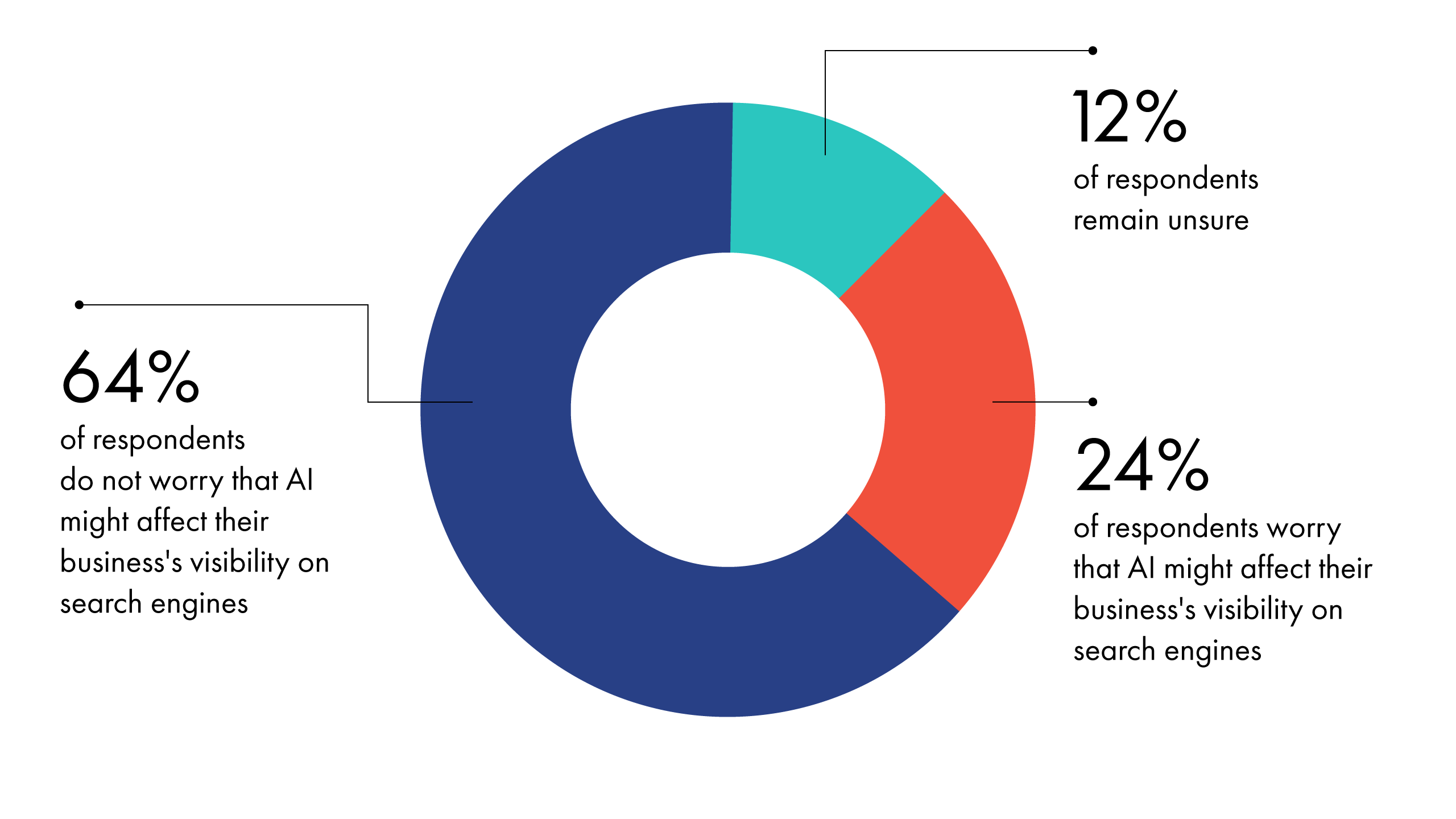
While business owners recognize the benefits of using AI, they also harbor some concerns. One such concern revolves around the potential impact of AI on website traffic from search engines. According to a Forbes survey, 24% of respondents worry that AI might affect their business's visibility on search engines. However, 64% do not share this concern, and 12% remain unsure. Finding the right balance between the advantages of AI and potential drawbacks will be crucial for businesses navigating the evolving digital landscape.

Conclusion
The integration of AI, chatbots, and mobile adoption is reshaping the travel industry, offering tremendous potential to enhance customer experiences, streamline operations, and drive mobile adoption. The insights and possibilities offered by AI-powered solutions like ChatGPT are transforming the way we approach travel.
To succeed in digital transformation, travel companies must ensure their data is properly structured and indexed in the cloud, enabling teams to leverage its advantages effectively. DataArt's teams of experts can assist businesses in measuring, adopting, and scaling AI to achieve success. Join our webinar to discover how AI and ML are shaping the travel and hospitality industry and learn what it takes for your company to stay ahead of the curve.