By integrating data-driven strategies, mobile-first experiences, and gamification, retailers can engage modern shoppers while staying true to their brand heritage.
Fast fashion brands like Shein and Temu have disrupted the global retail industry, achieving unprecedented growth through innovative, tech-driven strategies. This article discusses the core tactics behind their success and offers valuable insights for traditional retailers looking to stay competitive in today’s digital landscape.
Fast Fashion Moves Fast
Chinese fast-fashion marketplaces Shein and Temu are not just traditional fashion retailers—they are tech-enabled marketplaces that redefine online shopping. A more fitting description for these two players would be tech-enabled platforms that are pioneering and redefining the very nature of doing business. Through sophisticated technical solutions — such as data-driven decision-making, optimized mobile experiences, and strategic integration of consumer psychology — SHEIN and Temu are now at the edge of modern retail innovation. By leveraging data-driven decision-making, mobile-first strategies, and consumer psychology, these brands have transformed the retail game.
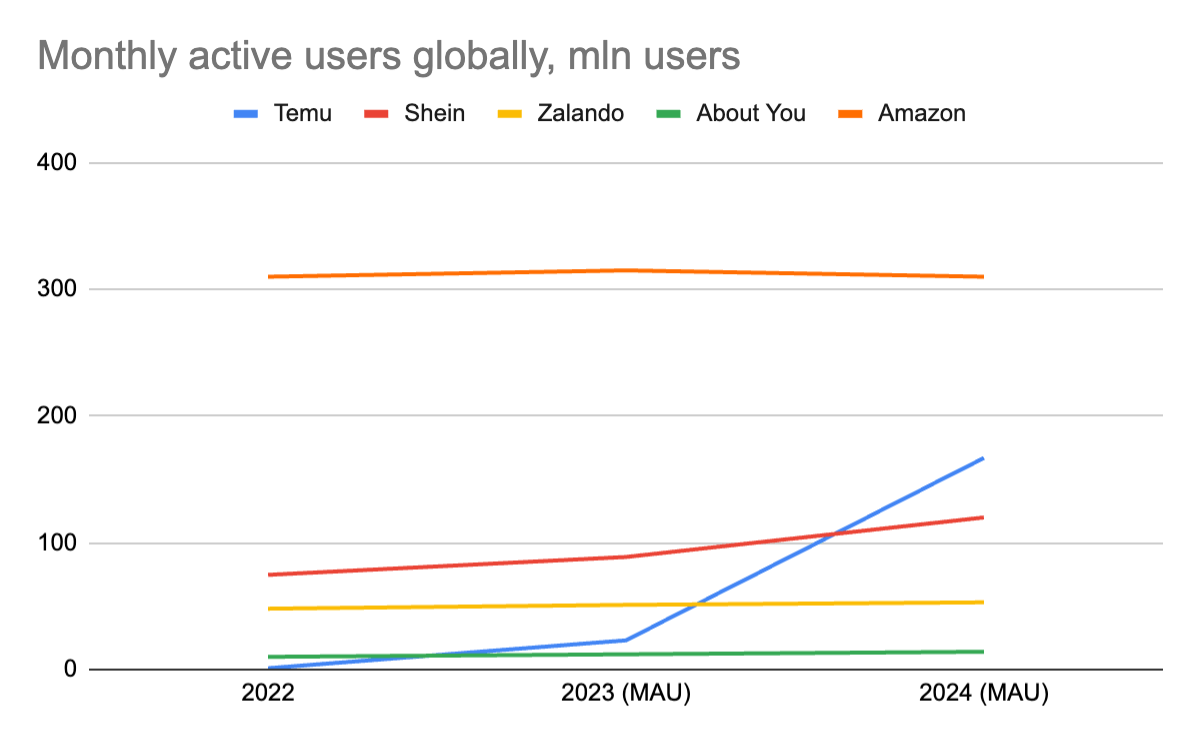
In the chart below we see that, since launching in 2022, Temu has skyrocketed to 167M monthly active users (MAUs) by 2024, fueled by aggressive marketing and gamification strategies.
Temu is now ranked among the top 100 most visited websites globally, with a significant growth of over 40% in the first three months of 2024. Meanwhile, Shein has maintained a strong presence in the fast-fashion market, using social media and influencer partnerships to ensure steady expansion.
For comparison, we've included data from Zalando and About You, leading European fashion platforms, and Amazon, the global e-commerce giant.
Here are three key lessons traditional retailers may find worth learning and adopting from these digital disruptors:
Lesson 1. Data-Driven Product Assortment
Shein and Temu don’t guess trends—they predict them.
Shein employs demand-driven trend modeling, relying on extensive data inputs, including social media trends, customer searches, and real-time purchase behavior. By adding up to 10,000 items daily in small batches, Shein evaluates their performance using hit-rate analytics. Products that fail to resonate are quickly removed, while successful items are scaled up.
Similarly, Temu uses real-time feedback loops, sharing consumer demand data with sellers to optimize product offerings. This helps sellers stay attuned to market trends, creating a cycle of responsiveness and efficiency.
Takeaways for Retailers:
Embrace Data-Driven Retail to Stay Competitive: Understanding demand, curating assortments, and adjusting offerings based on data is increasingly becoming essential in today's market.
Leverage Data to Refine Your Strategy: Businesses that rely solely on intuition or traditional procurement practices risk gradually losing their competitive edge. Across the industry, including but not limited to fast fashion, leading retailers are increasingly turning to data insights to inform and refine their procurement strategies and product assortments.
Move Beyond Intuition-Based Procurement: For legacy retailers with production cycles spanning 7–12 months, this level of agility may seem unattainable. However, adopting data-driven tools can bridge the gap.
Leverage Data to Curate Product Assortments: Social listening tools, AI trend scouts, and trends analytics platforms can process data from social networks, search engines, and public forums, offering insights into emerging trends.
Adopt AI-Powered Tools: By incorporating these tools, even traditional retailers can adapt their product assortments faster and tap into new markets, such as Gen Z consumers. Brands like H&M, Burberry, and Uniqlo already invest heavily in such platforms, blending traditional retail strengths with tech-forward strategies.
Lesson 2. Mobile-First Shopping Experiences
Shein and Temu thrive in the mobile-first era, using social media and gamification to drive app downloads and engagement. As of 2024, Temu and Shein rank #3 and #5 among the world’s top shopping apps. Their apps aren’t just transactional; they’re interactive, offering features like:
Personalized recommendations based on browsing history.
Gamification mechanics, such as spin-to-win discounts and daily rewards.
Seamless social media integration, enabling users to shop directly from influencer posts.
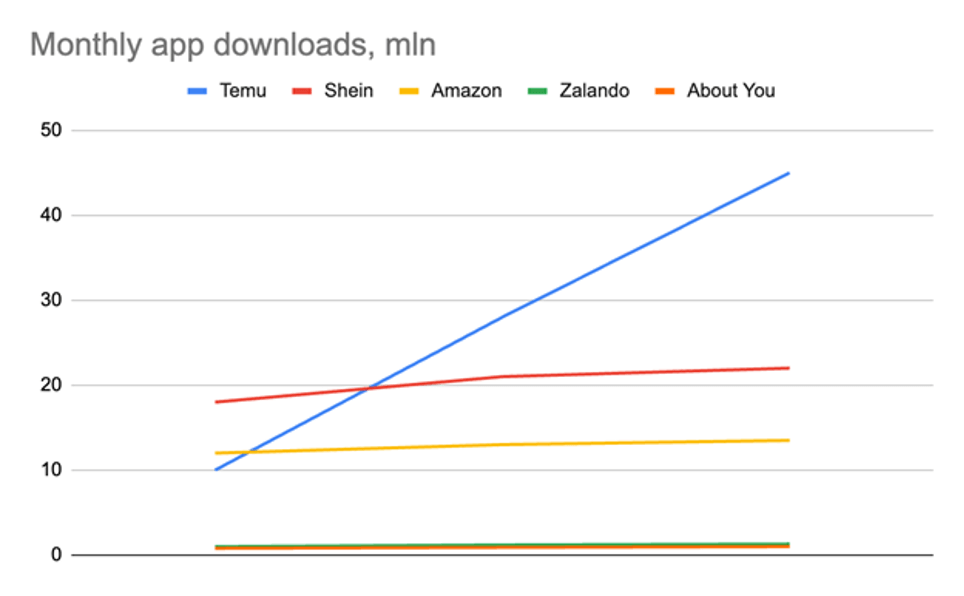
Temu’s app downloads surged from 10 million in late 2022 to 45 million monthly downloads in 2024, far outpacing competitors. Shein maintains a steady 22 million monthly downloads, reinforcing its global presence.
These mobile strategies resonate particularly well with Gen Z, who prioritize convenience, personalization, and engaging content. Social media platforms like TikTok further amplify the appeal of fast fashion by showcasing trending products in real time.
Takeaways for Retailers:
Shift from Desktop-First to Mobile-First: For retailers still focused on physical stores or desktop e-commerce, improving mobile experiences is no longer optional. Key areas for growth could include omnichannel integration, gamification, and social commerce.
Experiment with Interactive Features: Brands like Nordstrom and Macy’s are already testing app-based loyalty programs and augmented reality tools, signaling a shift toward mobile-first engagement.
Lesson 3. Gamification and Loyalty Engineering
Shein turns shopping into a game by rewarding users with loyalty points for activities like creating accounts, writing reviews, uploading photos, and joining live-stream events or outfit challenges. These points can be redeemed for discounts, fostering a sense of community and incentivizing repeat purchases.
Temu employs a referral-based gamification model, rewarding users for inviting friends. In-app games like “team-buy discounts” encourage group participation, creating a viral engagement loop.
Takeaways for Retailers:
Use Gamification to Boost Engagement: While the effectiveness of various mobile strategies—such as gamification, notifications, and rewards—can be debated, many established fashion brands are increasingly exploring ways to deepen customer engagement and build loyalty. These efforts include mobile loyalty programs, personalized marketing, strategic partnerships, and experimental marketing, among others. The overall creativity of deepening customer engagement and winning loyalty is a never-ending race.
Loyalty Isn’t One-Size-Fits-All: Retailers like Nike and Adidas have successfully integrated gamification into their loyalty programs, blending digital and physical experiences to build stronger customer relationships.
Beyond Fast Fashion: What Traditional Retailers Can Do Differently
Whereas there are lessons to learn from fast fashion, fashion retailers should focus on their advantages to win the market game. Classic fashion retailers hold three major advantages that can set them apart:
Physical Store Presence: One area where Chinese fast fashion has yet to make a strong impact is utilizing an omnichannel experience and physical store presence. Recent reports highlight that in-store interactions and a strong store experience play a key role in customer retention — an advantage that traditional fashion retailers and brands continue to hold.
Brand Heritage and Trust: Established brands can reinvent themselves and appeal to new customer segments. A good example is Hugo Boss, which has made a concerted effort to attract Gen Z consumers. According to this survey, trust remains a significant issue for these marketplaces. Many consumers doubt the authenticity of discounts (25%) and feel manipulated by marketing tactics (51%).
Sustainability as a Competitive Edge: Fast fashion brands often face criticism for encouraging overconsumption and relying on unsustainable manufacturing practices, with reports of poor working conditions and environmental damage harming their reputations. Embracing sustainability is not just a regulatory necessity, but it also offers a significant competitive edge for traditional fashion retailers.
The Future of Retail: Blending Digital Agility with Brand Values
The retailer leaders of tomorrow will be those who blend fast fashion's digital agility with traditional strengths—quality, trust, and sustainability.
By integrating data-driven strategies, mobile-first experiences, and gamification, retailers can engage modern shoppers while staying true to their brand heritage.
The key? Move fast, but stay authentic.
Subscribe to Our Newsletter
Subscribe now to get a monthly recap of our biggest news delivered to your inbox!
By clicking 'Accept All Cookies', you agree to the storing of cookies on your device to enhance site navigation, analyze site usage, and assist in our marketing efforts. More information
Privacy Preference Center
When you visit any website, it may store or retrieve information on your browser, mostly in the form of cookies. This information might be about you, your preferences or your device and is mostly used to make the site work as you expect it to. Because we respect your right to privacy, you can choose not to allow some types of cookies. More information
Manage Consent Preferences
Strictly Necessary Cookies
Always Active
These cookies are necessary for the website to function and cannot be switched off in our systems. They are usually only set in response to actions made by you which amount to a request for services, such as setting your privacy preferences, logging in or filling in forms. You can set your browser to block or alert you about these cookies, but some parts of the site will not then work. These cookies do not store any personally identifiable information.
Functional Cookies
These cookies enable the website to provide enhanced functionality and personalisation. They may be set by us or by third party providers whose services we have added to our pages. If you do not allow these cookies then some or all of these services may not function properly.
Targeting Cookies
These cookies may be set through our site by our advertising partners. They may be used by those companies to build a profile of your interests and show you relevant adverts on other sites. They do not store directly personal information, but are based on uniquely identifying your browser and internet device. If you do not allow these cookies, you will experience less targeted advertising.
Performance Cookies
These cookies allow us to count visits and traffic sources so we can measure and improve the performance of our site. They help us to know which pages are the most and least popular and see how visitors move around the site. All information these cookies collect is aggregated and therefore anonymous. If you do not allow these cookies we will not know when you have visited our site, and will not be able to monitor its performance.