


How would you feel if your flight was delayed, your luggage was misplaced, and no airline staff member could give you the attention you needed? Unfortunately, this nightmare scenario is too common in today's air travel industry.
Recent data from Contact Week shows that while 20% of consumers feel airlines and transportation have improved their service, 55% of consumers across all sectors report worsening customer experiences. Although the progress in the airline industry is promising, there’s still significant room to make the journey smoother and more pleasant for everyone.
Airports and airlines sit on massive amounts of passenger data: Travel patterns, peak contact times, common complaints, historical delays, and more. Yet, much of it remains underused. When organized and activated effectively, data can help organizations anticipate needs, reduce friction, and respond faster. This isn’t just about automation; it’s about smarter decision-making, driven by insight.
That’s why forward-thinking operators are turning to AI-powered, data-driven solutions. By combining machine learning models with structured and unstructured customer data, aviation providers are building intelligent systems that elevate service at scale while boosting efficiency.
AI-Powered Contact Center for a UK Airport
At DataArt, we help travel companies connect the dots between data, AI, cloud technology, and customer satisfaction. One recent example is one of our clients, a UK-based international airport, which illustrates what’s possible when AI is applied with purpose. The challenge? The airport's website “Contact Us” form generated a steady flow of frequently submitted queries, many of them repetitive. These were manually handled by duty managers, leading to delays and added workload.
Our Solution:
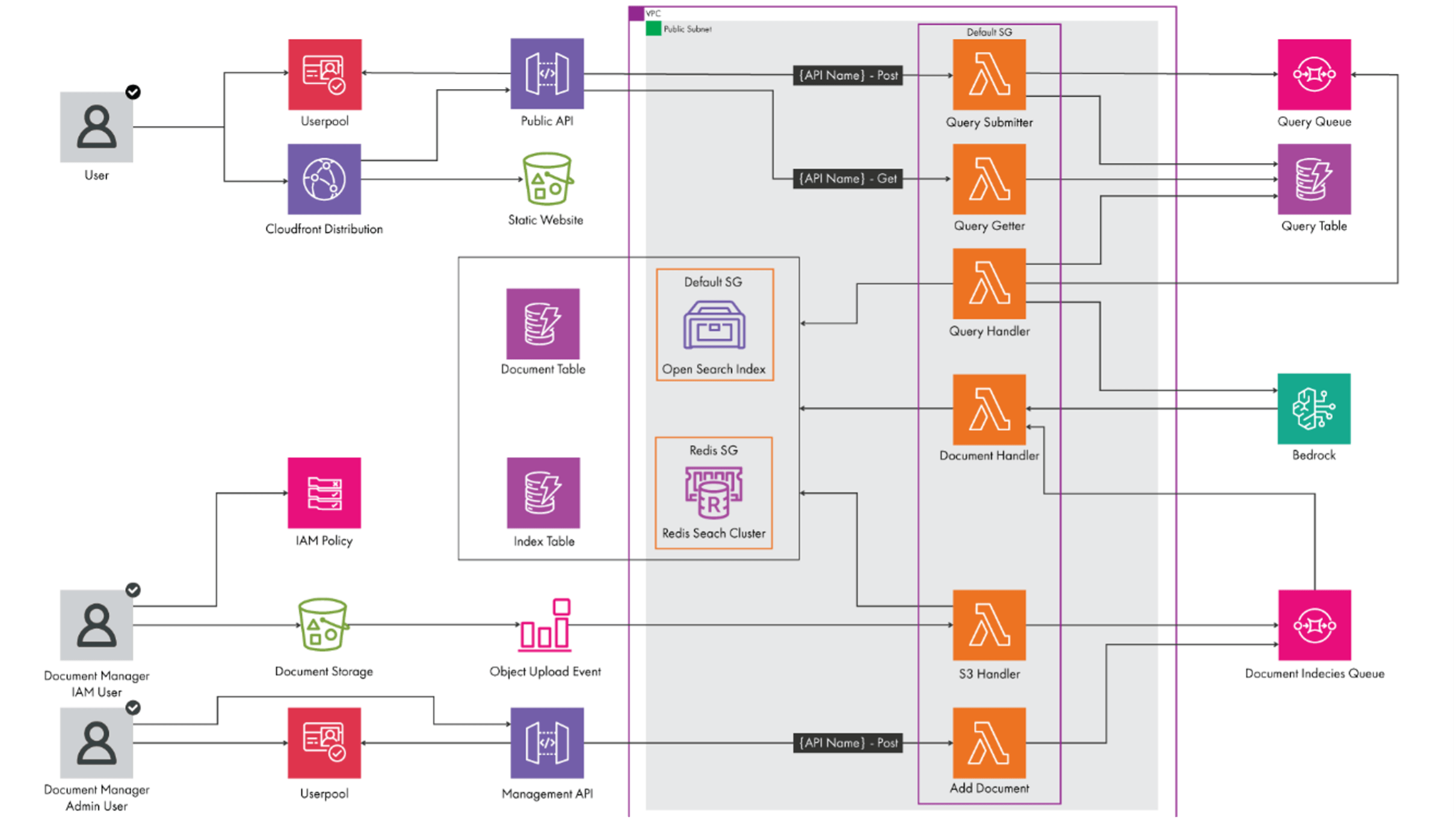
To address this, DataArt developed an automated solution leveraging Foundation Models available in Amazon Bedrock and their proprietary TRAG Accelerator. The solution ingests information such as the airport’s Frequently Asked Questions (FAQ) and other relevant documentation, stores it in Amazon OpenSearch Service (which functions as the Vector Database using the Amazon Titan Embeddings model), and retrieves relevant and quick answers using a Retrieval Augmented Generation (RAG) approach.
Generative AI in Travel
Discover MoreThe system classifies incoming requests using the AI21 Jurassic model and generates responses with Anthropic’s Claude in Amazon Bedrock. If a query cannot be resolved automatically, it’s routed to the appropriate department for human follow-up.
DataArt implemented a two-phase approach for the project: a Proof of Concept (PoC) to validate functionality, followed by the development of a Minimum Viable Product (MVP) for real-world deployment.
Outcomes:
- +95% reduction in response time*
What used to take hours is now resolved in seconds, greatly improving passenger satisfaction and staff efficiency, and easing the workload on airport employees.
- 100% accuracy and 99% adequacy on FAQs replies*
Using advanced models like AI21 Jurassic and Anthropic’s Claude, the solution generates 100% accurate responses for frequently asked questions. The replies were not only correct but also appropriate and useful in 99% of cases, meaning they effectively addressed the passenger’s query.
- 20% annualized ROl
By automating routine inquiries, the airport freed up several full-time employees to focus on other higher-value activities.
- Effective filter for human intervention
The solution filters and classifies incoming messages, ensuring only complex or sensitive issues are passed to staff.
- Enhanced productivity and improved customer experience
Faster, more accurate responses translated to happier customers, and the streamlined workflow helped the airport's operations run more smoothly.
* Note: The metrics on reduced handling time and accuracy are based on initial testing results conducted by the project team.
Highlights:
- DataArt’s TRAG Accelerator helped the team reduce the MVP infrastructure development time by up to 4 times, compared to the average development time (3-6 months).
- The time saved allowed the team to focus more on the accuracy of the solution itself, refining it more within the project timeframe.
Final Thoughts
If you consider leveraging AI to enhance your operations, DataArt and AWS offer the tools and expertise to make the process fast and productive. Using Amazon Bedrock foundation models and DataArt's proprietary TRAG Accelerator, you can effectively translate your innovative concepts into reality using DataArt’s PoC/MVP approach. Schedule a session with the DataArt AI/ML Lab team to discover more about our innovative solutions and the patterns we have detected.