Beyond UI: Evolving TouchCare into an AI-Powered Healthcare Experience
CLIENT
CHALLENGE
The UX challenges extended beyond visuals: confusing onboarding, unclear error states, static provider PDFs, limited wallet functionality, and complex 150-plus-page plan documents that lacked intelligent support. The premium tier lacked clear differentiation, and internal workflows were heavily manual.
Solution Highlights
- Reframing the redesign as a full product transformation
- Rebuilding architecture through story mapping and scoping
- Simplifying case creation with AI-powered categorization
- Introducing structured intake and improved routing
- Differentiating the premium tier
- Integrating AI features for members and internal teams
- Establishing Figma as the source of truth in a hybrid AI workflow

The Hybrid AI Workflow
Rather than discarding the AI-generated prototype, we used it as a basis for documentation, extracting flows and clarifying assumptions. We then rebuilt the product in Figma, establishing it as the single source of truth. We restructured navigation, refined flows, and defined a scalable design system. Only after validating the structure did we strategically reintroduce AI. AI supported layout exploration, responsive desktop variations, microcopy suggestions, and illustration generation. One principle guided every decision: AI supports design; designers define it.
Discovery, Story Mapping & Scoping
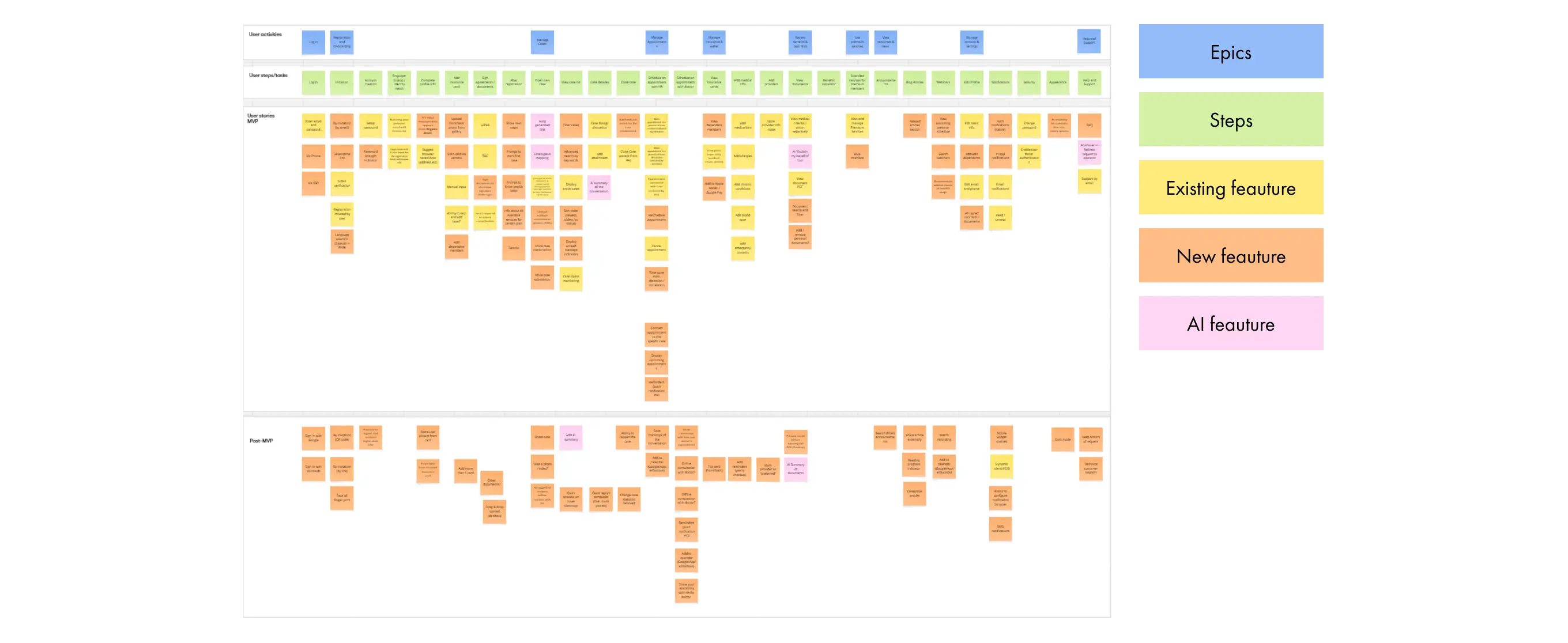
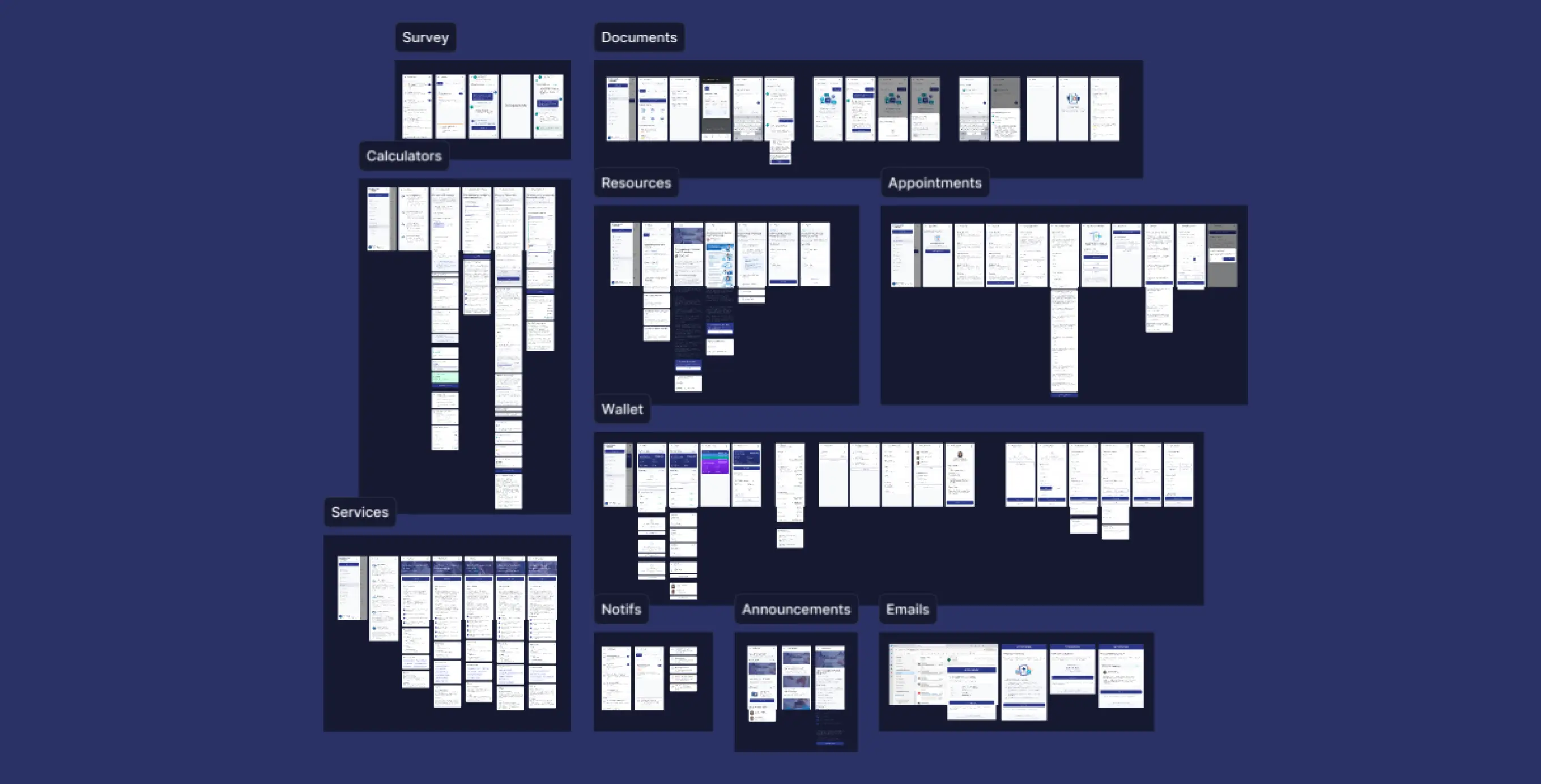
Through stakeholder interviews and workshops, we clarified the business model, defined roles, and pinpointed key pain points. We then restructured the product architecture using user story mapping, which covered the entire member journey from registration to wallet management. This phase involved more than just recreating features; we also assessed legacy functionality and identified new opportunities. Proposed improvements included streamlined case intake flows, better provider presentation, expanded wallet features, and clearer premium differentiation. We considered AI enhancements, such as smart intake prompts and workflow optimization tools.
Mobile-First to Responsive Web
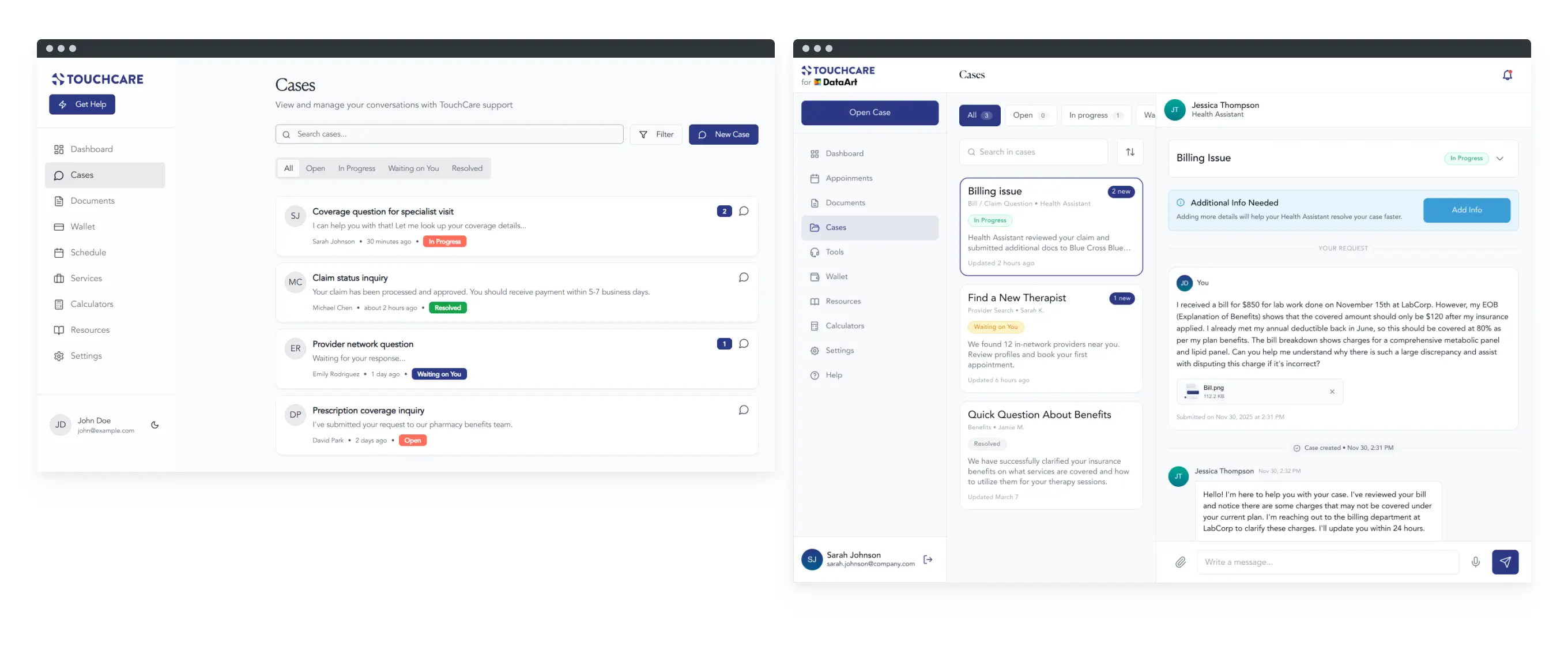
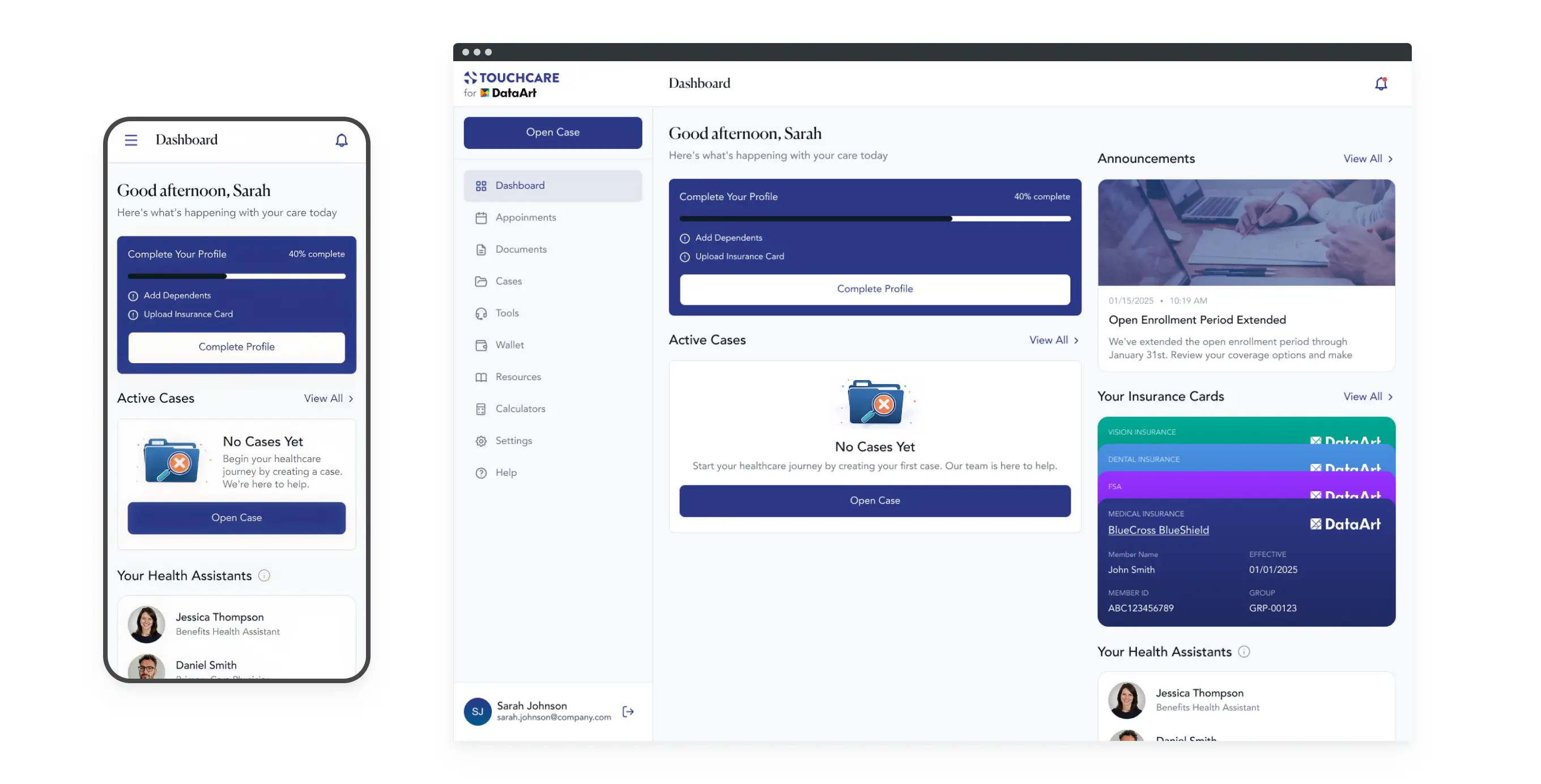
We adopted a mobile-first approach, prioritizing clarity and simplified navigation. The system was then expanded into responsive desktop layouts. AI supported layout exploration during desktop adaptation, accelerating iteration while maintaining structural consistency.
Implementing the new design
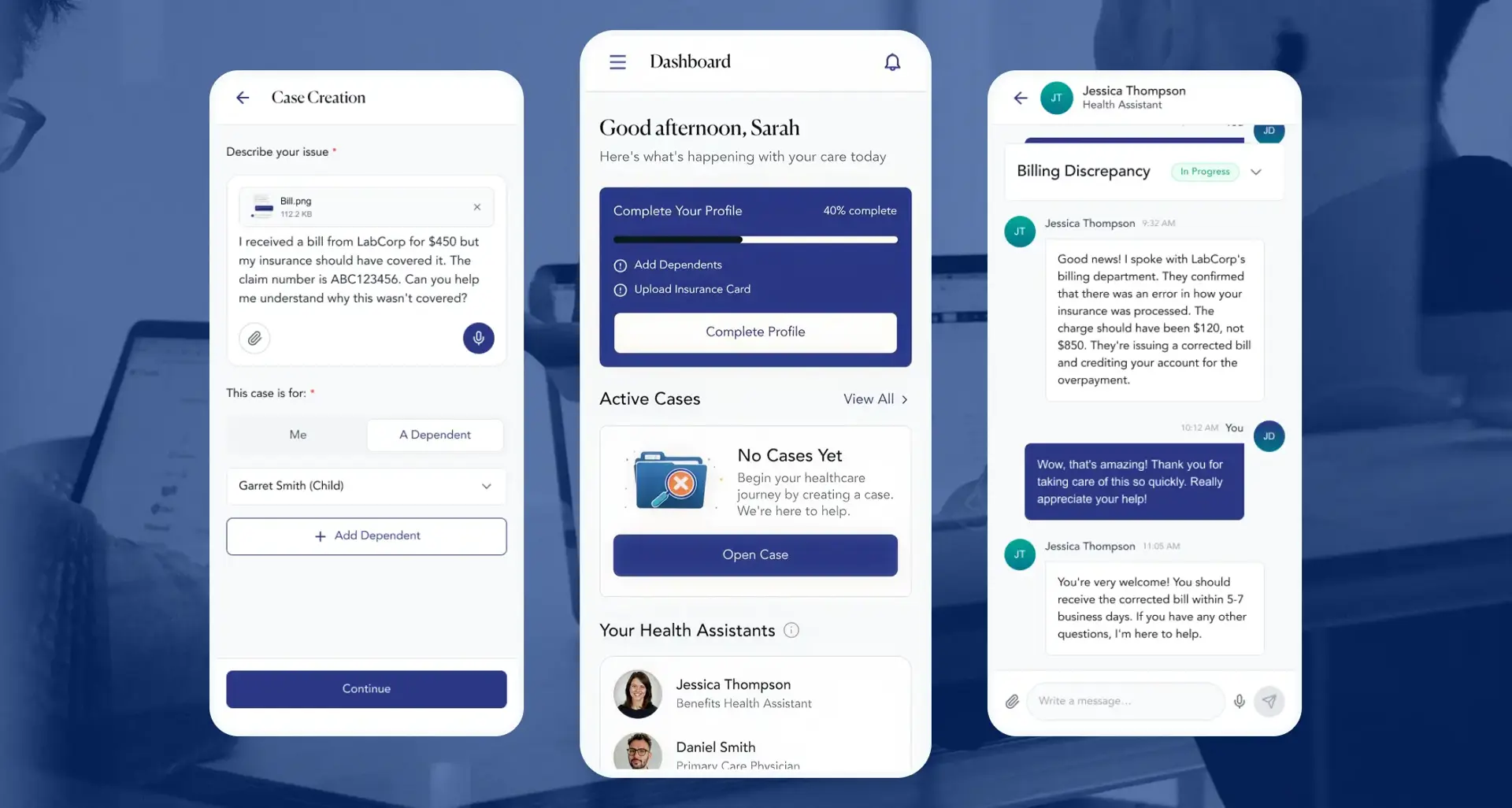
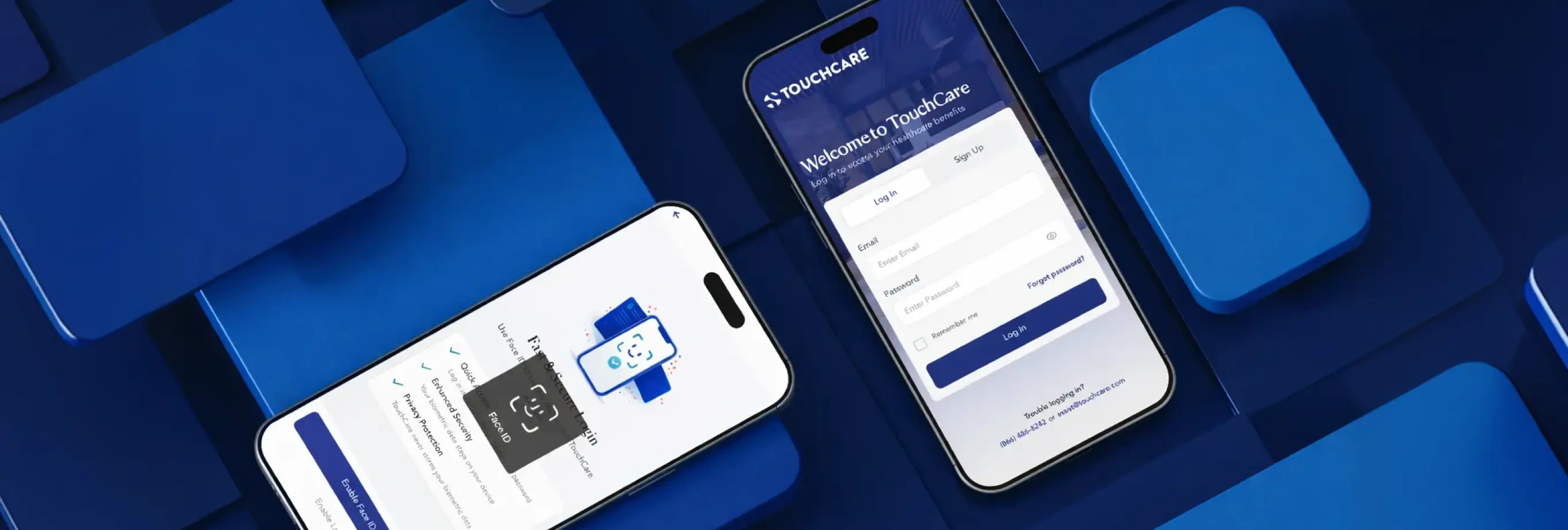
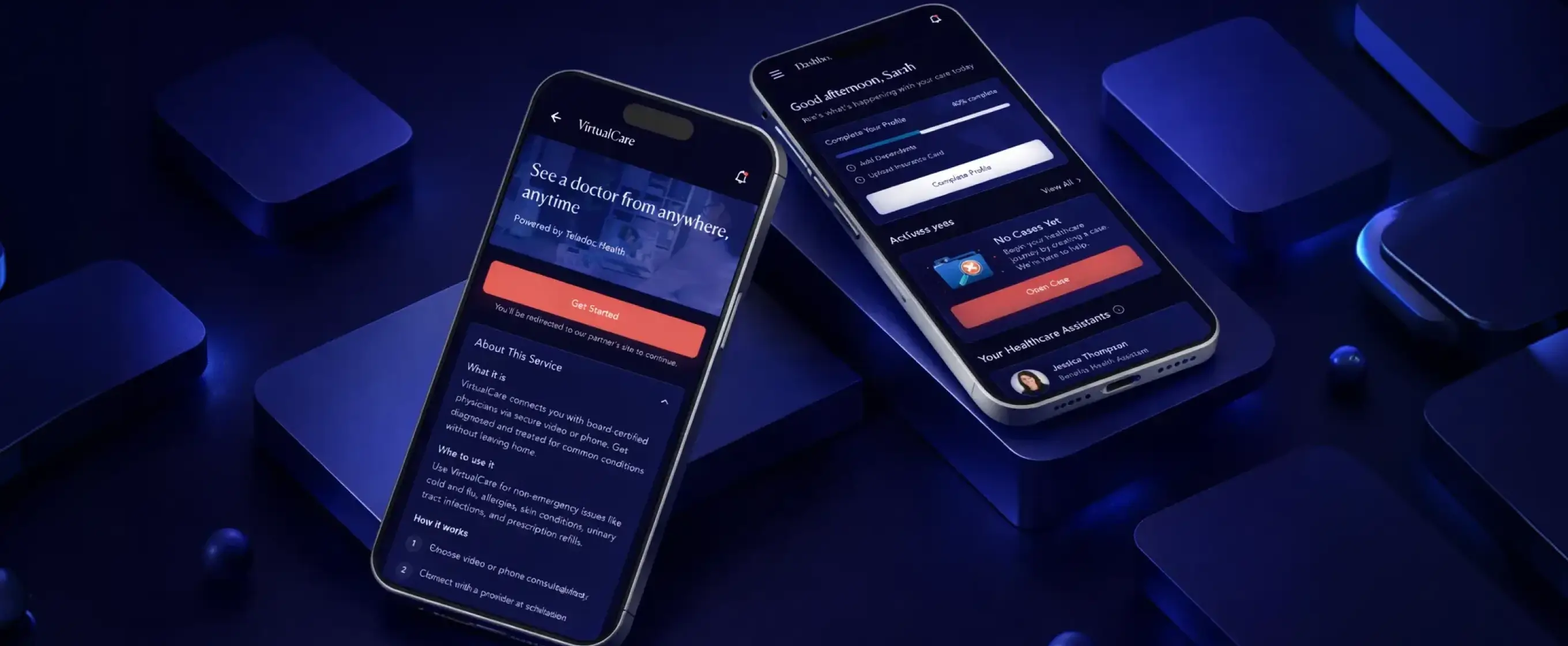
The new TouchCare experience was built on a restructured foundation, not just updated visuals. We introduced a cleaner navigation system, simplified onboarding, and a more intuitive case creation flow centered around one clear primary action. The interface now reflects the human-first concierge model while integrating intelligent automation in the background.
AI-Enhanced Product Features
In case creation, AI automatically categorizes and structures member input. We also introduced an AI-powered chatbot that helps members quickly find answers within dense plan documents. Users can ask direct questions and receive contextual answers drawn from their documents, with escalation to a Health Assistant when needed. Internally, AI handles smart tagging, summarization, and workflow efficiency, freeing up Health Assistants to focus on members.
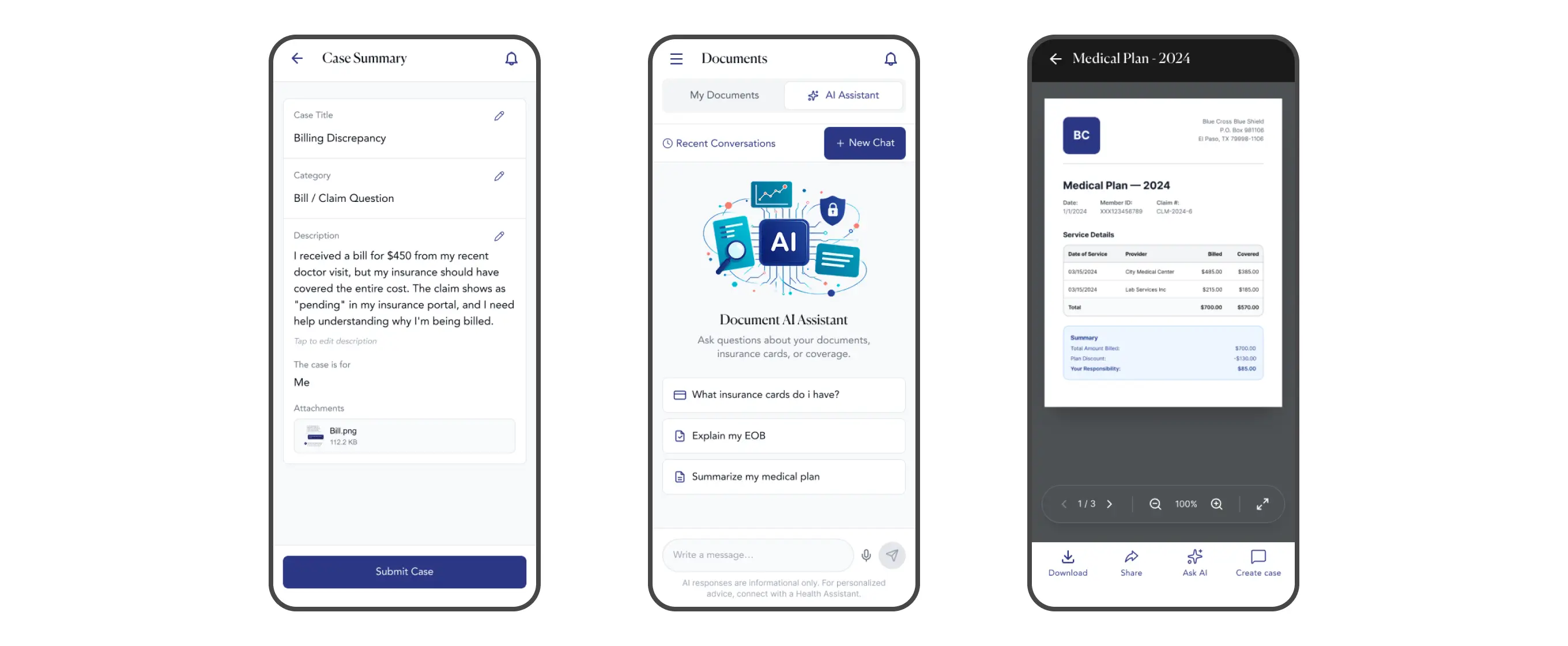
Illustration System
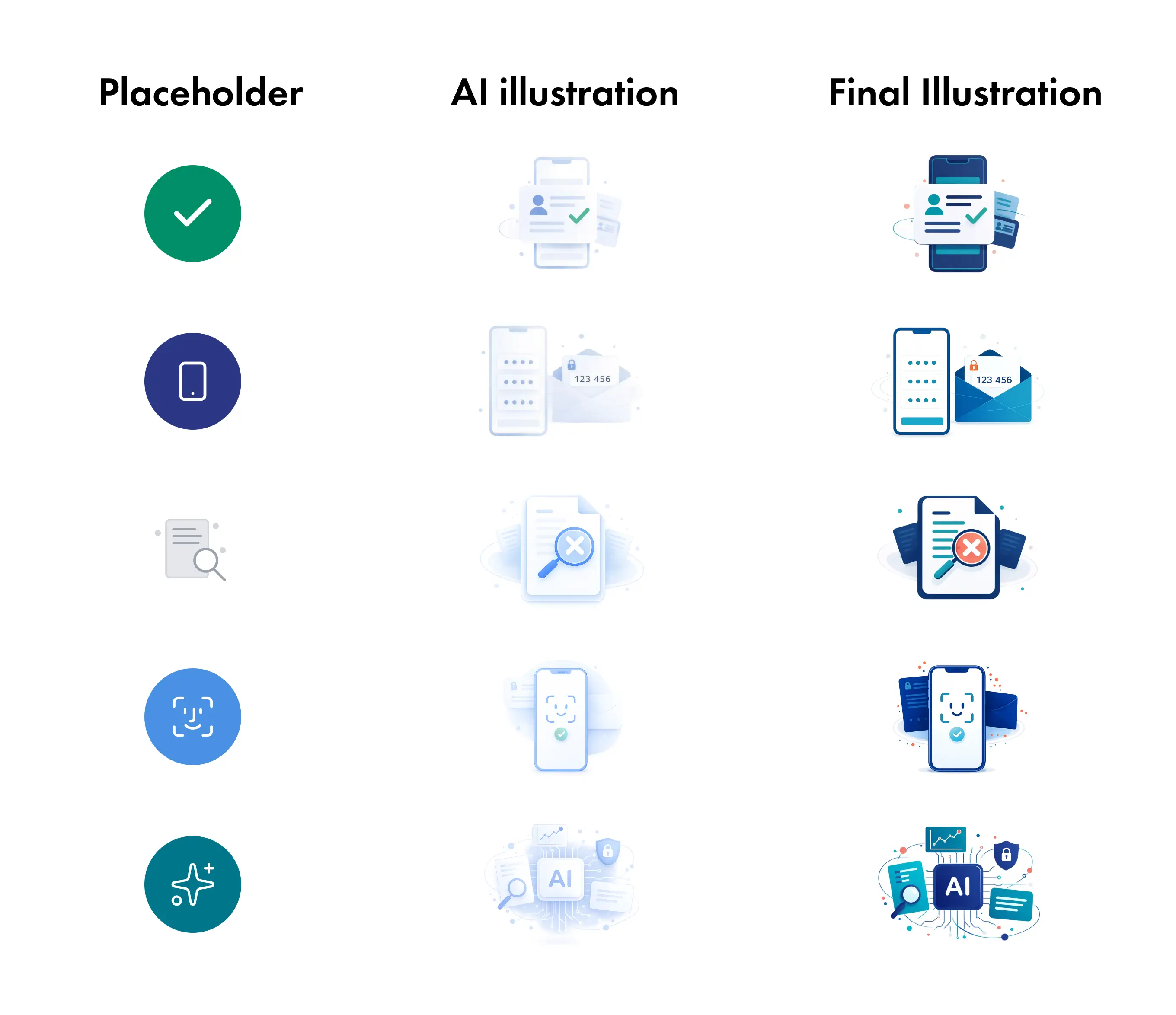
Illustrations evolved from simple wireframe placeholders into a refined visual language. AI-generated illustrations introduced minimal healthcare themes, soft geometry, and brand-aligned palettes. After client review, colors and tone were refined for premium consistency.
Designing TouchCare Blue
We designed TouchCare Blue as a refined premium layer within the existing platform. Instead of building a separate experience, we introduced a distinct visual language built on elevated color accents, sharper hierarchy, and more polished UI detailing. This approach communicates exclusivity while maintaining subtle structural consistency.
Conclusion
The TouchCare project evolved from a visual refresh into a structured, AI-enhanced platform transformation. By combining discovery, story mapping, and a hybrid AI workflow, we modernized the product while preserving its human-first concierge model. AI was used strategically, accelerating exploration and enabling intelligent features without compromising control. The result is a scalable, flexible, enterprise-ready system built for long-term growth.
Anastasia leads the dynamic DataArt Design Studio team of UI/UX specialists, 3/2D artists and webmasters and coordinating the resources, establishing the processes and working on both internal and external PR of UX services. Anastasia has a vast hand-on experience in design, which helps to be on the same page with designers and clients.


