Introduction
Certain tools possess universal utility, applicable in diverse contexts and locations. Such tools typically exist within highly competitive environments, and those of superior quality often capture the most significant market share.

On the other hand, there are tools designed with a niche focus to cater to specific needs. Despite inherent shortcomings, they are often accepted and forgiven if they address that specific area or need.
Our focus in this article is on one such niche tool – Amazon Managed Blockchain (AMB), a solution that helps speed up and simplify the adoption of blockchain technology. It is a story about DataArt helping a UK-based financial service provider build a blockchain-based solution from start to finish.
In this case, AMB saved us thousands of development hours and hundreds of thousands of dollars by freeing up resources to focus on business needs and project management and planning, which unlocked additional savings through a well-designed infrastructure.
But before we venture any further, let us demystify blockchain and its uses.
Understanding the Blockchain and Its Functionality
So, who can benefit from the blockchain? The straightforward response is - anyone! Primarily because the blockchain is a type of database. Granted, there are many different, effective, and rightfully popular databases of different flavors, so let us examine the unique characteristics of the blockchain that set it apart from traditional options, such as PostgreSQL.
Indeed, the blockchain is a database, but its distinguishing proposition lies in its ability to store data in a reliable, easy-to-distribute, and trusted way across a network of specific nodes that can range into thousands. Data accuracy and authenticity are verified using various cryptographic algorithms and approaches, which differ among blockchains. The blockchain offers an appealing solution with the ability to track a record's history, the assurance of tamper-proof data, transparency for all participants, and the absence of central authority.
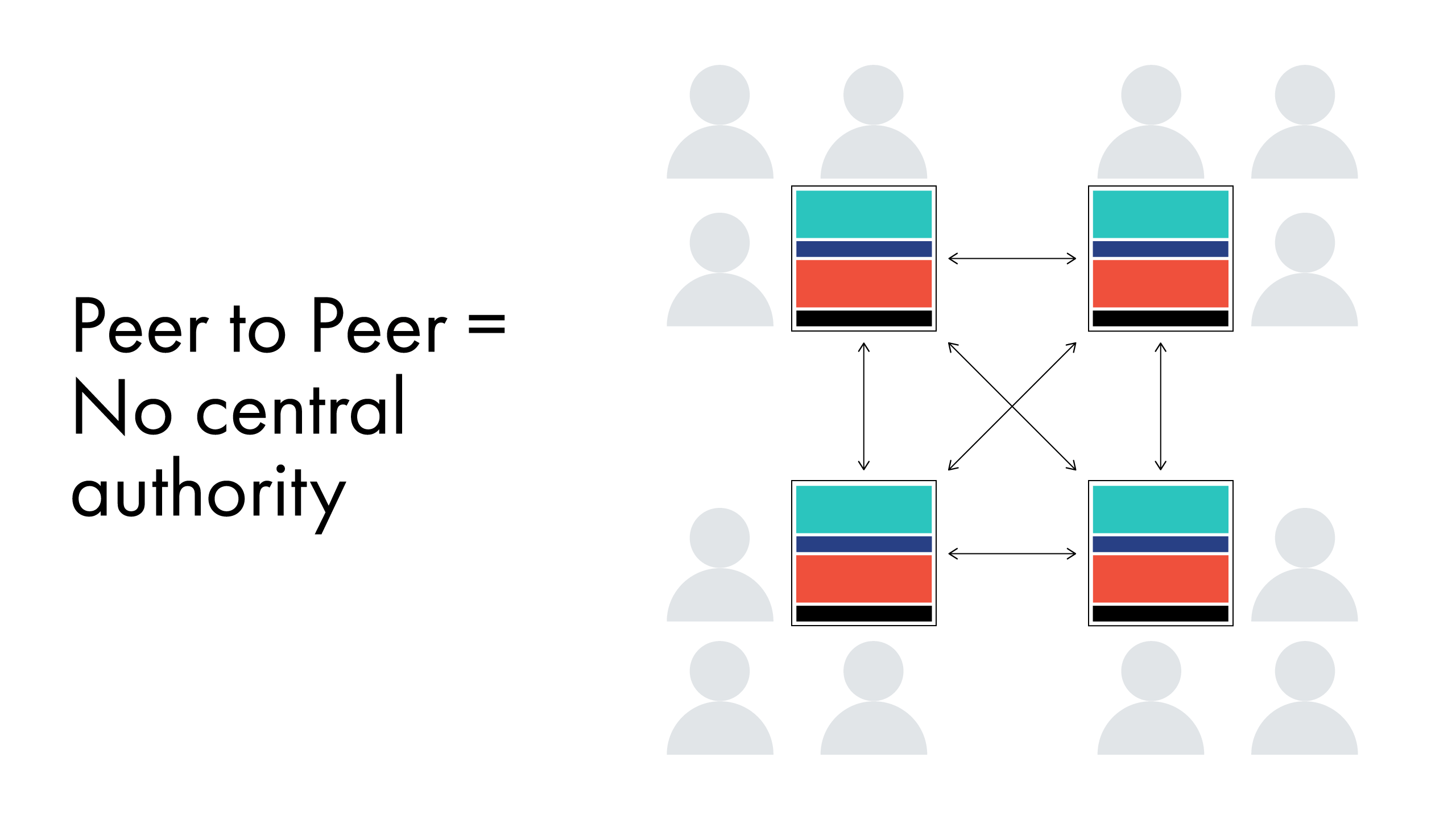
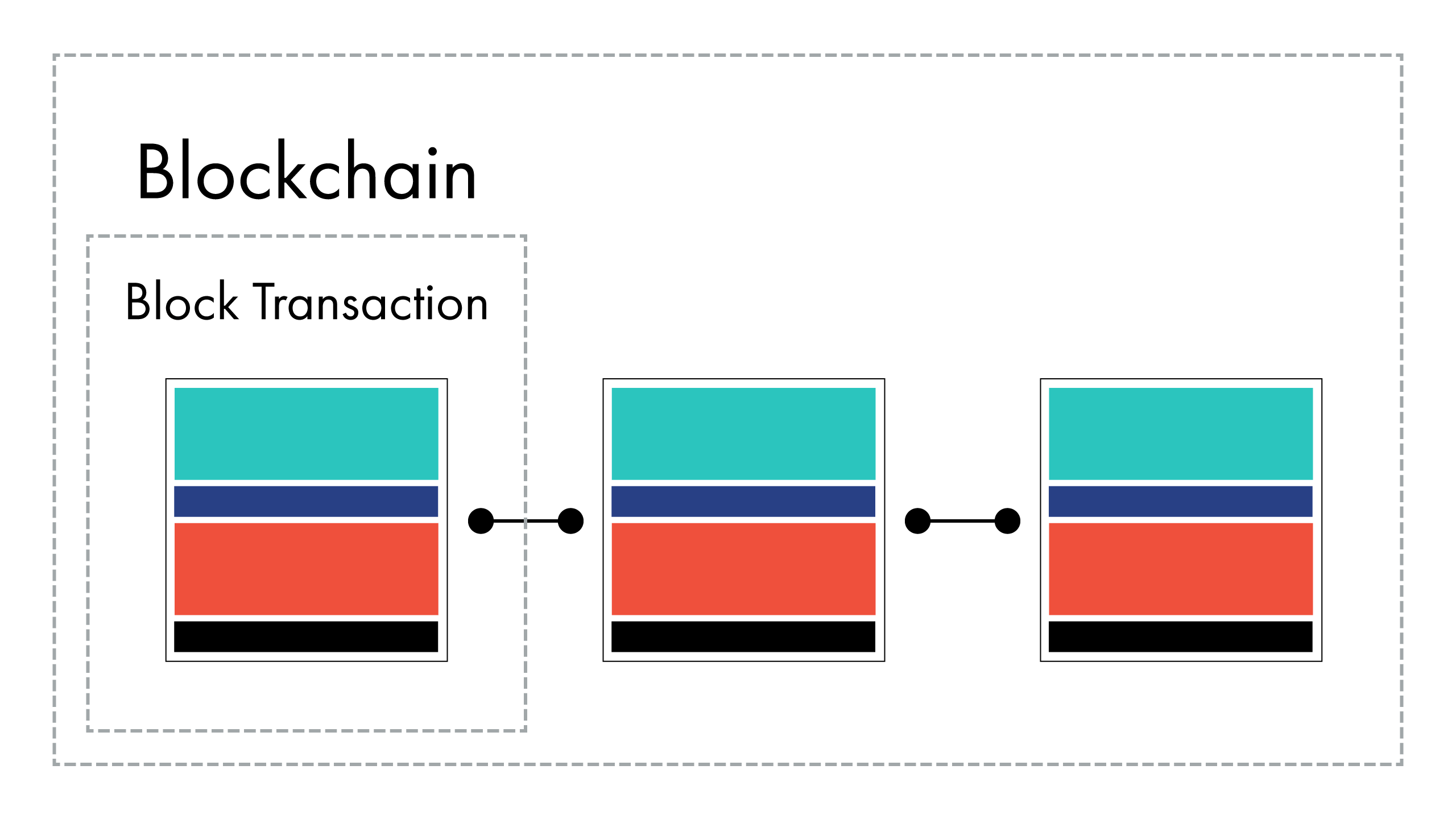
Structurally, the blockchain's core attributes are achieved by recording every modification to the state of the database (or the blockchain). These changes are referred to as transactions and are stored within blocks. The blocks are interconnected, allowing for easy authentication.
There are various types of blockchains, typically catering to different customer categories: fully public blockchain networks that involve mining (or minting), private networks with participant policies, and hybrid, which derive their features from both public and private blockchains. Usually, if the blockchain is used primarily to store data and is private from the policies and participants' perspective, it is referred to as a distributed ledger.
Most modern blockchains also allow specific business logic to run in the network. These applications, commonly known as smart contracts, offer an extra layer of trust, as it is not only the secure and trusted data but also the code that uses it! Depending on the blockchain, the smart contract could simply be a limited scripting language to enforce validation rules or a fully-fledged language capable of creating anything the customer may need.
Why Do We Need Help Setting It Up?
Like all good things, blockchains come at a cost. While the advantages of blockchain are numerous, it is reasonably common to contend with limited performance and a complex, often challenging deployment process. While performance limitations are generally accepted as a byproduct of the chosen blockchain implementation, the infrastructure and deployment processes are areas we can optimize.
As mentioned, the blockchain is typically a large network of interconnected and communicating nodes. While setting up a public node is the responsibility of the participant in such a node, the situation with private blockchains is different: not only is the connection trickier to configure due to a higher number of details to manage (e.g., more certificates), but concerns arise around data safety and overall security.
Establishing a dependable, secure, and scalable infrastructure requires a substantial investment of time, capital, and resources, and any assistance to streamline this process is invaluable. In this context, Amazon Managed Blockchain (AMB) is an outstanding solution to facilitate the deployment and management of blockchain-based systems.
What Makes Amazon Managed Blockchain Unique?
While innovative, AMB is not alone in offering managed blockchain capabilities. A multitude of technological platforms, as well as several cloud ecosystems, provide their own versions of the service. What sets AMB apart and makes it so appealing is its seamless integration with the existing AWS infrastructure.
AMB accomplishes the following:
- Manages the instances and network between them
- Takes control over the certificate authority
- Supports Ethereum’s Hyperledger Fabric
- Abstracts the management steps with convenient APIs
- Integrates blockchain seamlessly into the AWS ecosystem
The final point is deceptively simple, but it is probably AMB’s most compelling advantage. The fact that AWS hosts and runs blockchain technology simplifies its integration into the ecosystem, not only easing adoption and reducing entry barriers but also imparting a significant advantage – trust. In other words, AMB capitalizes on the worldwide credibility of AWS, encouraging businesses to adopt blockchain-based technologies and deploy distributed ledgers for production workloads.
Another benefit of AWS is the automation it offers. AMB can be configured with a traditional Infrastructure as a Code (IaC) tool. We used CloudFormation, to scale the network to our requirements.
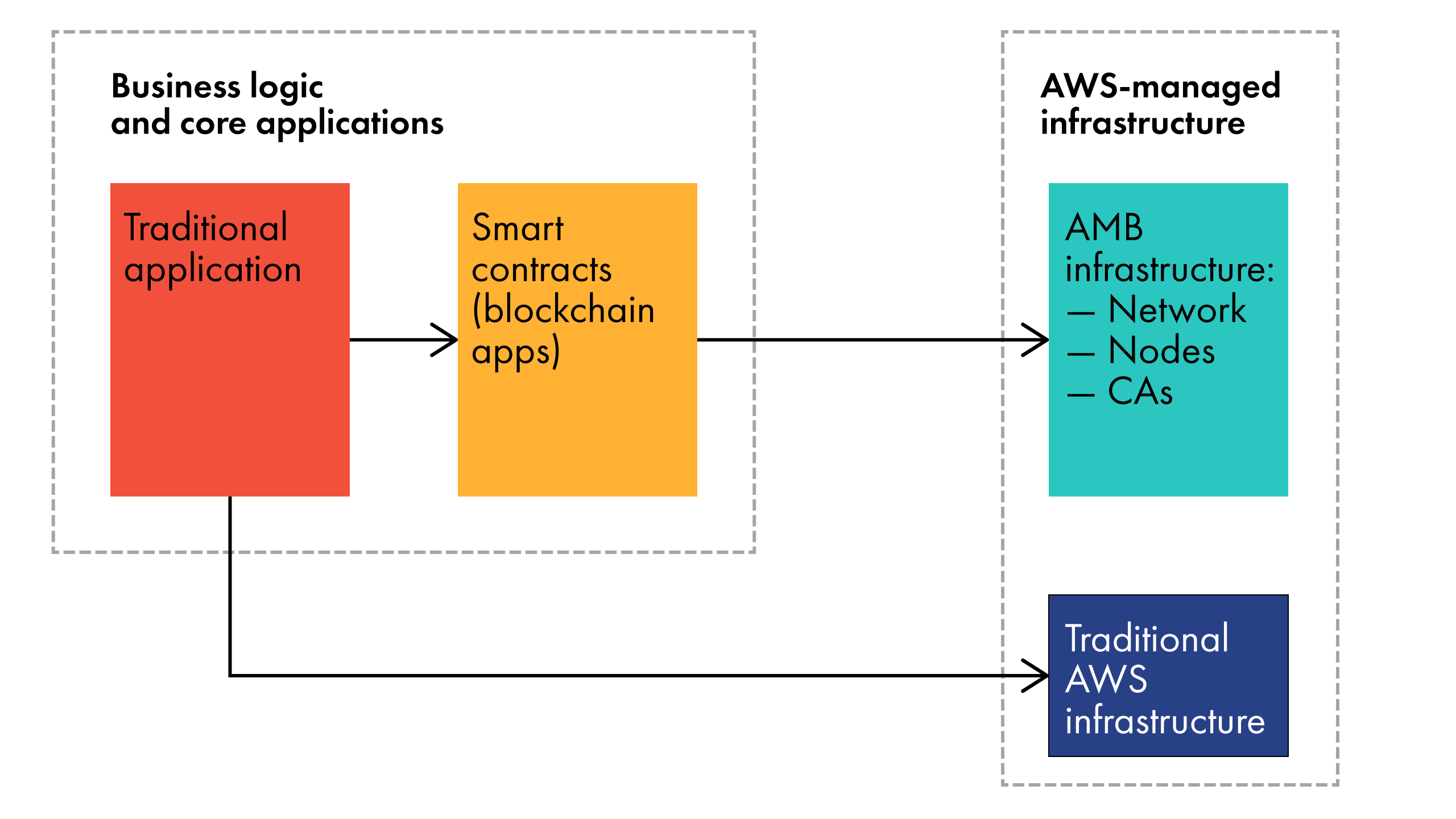
The diagram below illustrates the responsibilities division based on managed services and infrastructure proposals from AWS.
A Success Story: Streamlining Contract Workflows and Calculations with AMB
To provide a holistic and comprehensive AMB overview, we should cover an actual application of AMB. This takes us to a project designed to harness the full potential of AMB while developing a large-scale enterprise blockchain network.
Quite an audacious goal, would not you agree? Let us see how it went.
We decided to build a multi-tenant distributed platform for reinsurance companies to automate contract workflows and calculations. The product's primary objective was to automate key interactions between insurance and reinsurance companies, eliminating the need for third-party auditors, thereby saving time and money for each network participant. Typically, such financial activities take weeks, if not months, to finalize as pension transfers and calculations demand considerable time to manually process and agree upon.
It is worth mentioning that we initially attempted to go bare metal using the Hyperledger Fabric. While the system was operational, it proved unstable and difficult to control. We could only scale up to three participating companies on the network, and the infrastructure had to be simplified to be maintained reliably.
Additionally, the need to share keys — which also authorize network changes — among network participants gave rise to information security concerns and necessitated cumbersome manual procedures for controlling sensitive permissions. This, in turn, impeded automation.
After enduring almost a year of unreliable configurations and production instability, we made a tough call: to salvage what could be reused and transition to AMB. We never regretted this decision. Infrastructure management, automation, monitoring, and transparency were among the many immediate advantages we experienced upon adopting AWS.
How We Utilized AMB?
AMB served two core functions for us:
- Providing technological advantage by facilitating streamlined deployments and relieving infrastructure-related stress.
- Cultivating trust through secure, transparent, and straightforward business procedures: a crucial aspect, given the nature of the data being fully and permanently shared amongst network participants.
We embraced both opportunities: from the draft designs of our platform, we aimed to maximize AMB utility. We developed a platform that automates deployment and new participant onboarding while its configuration remains seamless (as there is no need to customize the infrastructure). Everything could be done with the help of an AWS account and the native AWS toolset.

Updates to the blockchain can be made by each participant as long as all participants agree on the changes. Hence, network management is straightforward (and can be configured using AMB capabilities) despite the complex underlying business processes. Business logic is abstracted away and encapsulated within self-contained blockchain applications - smart contracts or, in Hyperledger Fabric terminology, chaincodes.
Lastly, eliminating the need for in-house servers or proprietary data centers, which could provoke trust concerns, simplified compliance for our clients.
From a technical perspective, we utilized AMB to automatically configure networks and connectivity, set up network members and organizations (participants), certificate authorities, and network machines, and provide overall transparency, monitoring, and metrics for the Site Reliability Engineering (SRE) processes.
It is worth noting that we still had to manage the software side of the blockchain to handle channels and smart contracts, similar to managing the software side of deployment when using EKS.
Alternatives to AMB
If we discount bare metal options, there were some alternatives, but none were as reliable or as capable of supporting our technology. Back then, the choices were a simple custom blockchain from Azure (a service discontinued a couple of years ago) or less popular cloud platforms compatible with Hyperledger Fabric, such as IBM Cloud.
At that juncture, AMB was the only viable solution for building a reliable system while minimizing complexities associated with blockchain technologies.
It is worth mentioning that there are now cloud-agnostic options, such as FabDep (Fabric Deployer), although these are still in beta. Nonetheless, seeing the market expanding its toolkit is encouraging, reflecting demand for such a powerful technology.
Our Experience with AMB
It was a discovery journey with unique learning opportunities. As AMB was the first significant integration bringing blockchain management into the Platform as a Service (PaaS) world, it was not without minor issues and expectation adjustments.
AWS was very supportive of our product, granting us direct access to the service development team, which proved immensely helpful. With their expertise and our determination, the product's success was merely a matter of time. And a success it was!
As alluded to in the introduction, AMB took on the heavy lifting of spinning up the infrastructure. We used CloudFormation to automate most of the infrastructure and blockchain-related tasks that would otherwise have consumed a significant amount of time we needed to dedicate to the business logic. By not having to manage Hyperledger Fabric on our own, we were able to deliver the product more quickly and with a smaller team!
What Is the Future of Blockchain?
One silver lining to the hype shifting away from the blockchain is that we can now focus on building truly effective and demanded solutions for our clients using the right technology rather than the popular "choice of the day" technology. With tools like Amazon Managed Blockchain maturing further, we can focus on the business requirements and address them rather than trying to "whip up" a blockchain platform.
Conclusion
Managed blockchain services are here to stay, and that is good news. They lower the entry barrier for development teams to harness the power of blockchain. Amazon Managed Blockchain is a mature offering and is fully equipped to support enterprise-grade products or even global blockchain-based platforms. AMB mitigates blockchain risks and facilitates its adoption for businesses. The convenience of having a blockchain at your fingertips is fantastic and is set to get even better. If you need a private ledger-like technology or your business case hinges on Ethereum, give AMB a try. The service will offer you immense support!